
TL;DR
- Overwintering salvias in the UK depends entirely on which group your plant belongs to — hardy, semi-hardy or tender
- Fully hardy nemorosa and sylvestris need no winter protection — leave stems on until spring
- Semi-hardy microphylla and greggii need a mulch or pot move in colder gardens
- Tender guaranitica, patens and uliginosa need cuttings, lifting or moving under cover before the first frost
- The biggest killer of salvias in UK winters is wet roots, not cold — drainage is everything
Introduction
Overwintering salvias in the UK is one of those tasks that separates the gardeners who lose plants every autumn from those who don’t. The good news is that with the right approach for each type of salvia, winter losses are largely avoidable — and the approach is simpler than most people think.
The mistake most gardeners make is treating all salvias the same. A Salvia nemorosa ‘Caradonna’ from our Salvia nemorosa range needs nothing more than to be left alone through winter. A Salvia guaranitica will be dead by November without intervention. Getting that distinction right is the foundation of successful salvia overwintering.
This guide covers every scenario — from zero-effort hardy varieties to the more involved process of overwintering tender plants — with practical steps for each.
Quick Facts
| Biggest winter risk | Wet roots, not cold — ensure drainage before winter sets in |
| Hardy varieties | Leave stems on through winter for crown protection, cut back in spring |
| Semi-hardy varieties | Mulch crowns in autumn; move pots to sheltered spot |
| Tender varieties | Take cuttings by September or move under cover before first frost |
| First frost (average UK) | Late October in the north; November in the south and west |
| When to cut back | Spring — once new growth appears at the base |
Understanding Why Salvias Die in Winter
Cold alone rarely kills a salvia that’s properly suited to your climate. What kills them is the combination of cold and wet. Salvia roots sitting in waterlogged soil through a cold, wet winter will rot — while the same plant in free-draining soil in the same garden will often come through without any damage.
Drainage is the single most important factor in salvia winter survival — more important than fleece, more important than mulch, more important than which side of the garden you plant them. The RHS salvia growing guide is clear on this — wet, heavy soils are the primary cause of salvia losses in UK gardens.
Hardy Salvias — Zero Winter Effort Required
Salvia nemorosa & sylvestris — RHS H5 and above
Fully hardy salvias need no winter protection whatsoever. They are rated RHS H5 and above, meaning they survive the coldest UK winters without any intervention.
✓ What to do
- ✓Leave the stems on through winter — they insulate the crown and provide habitat for overwintering insects
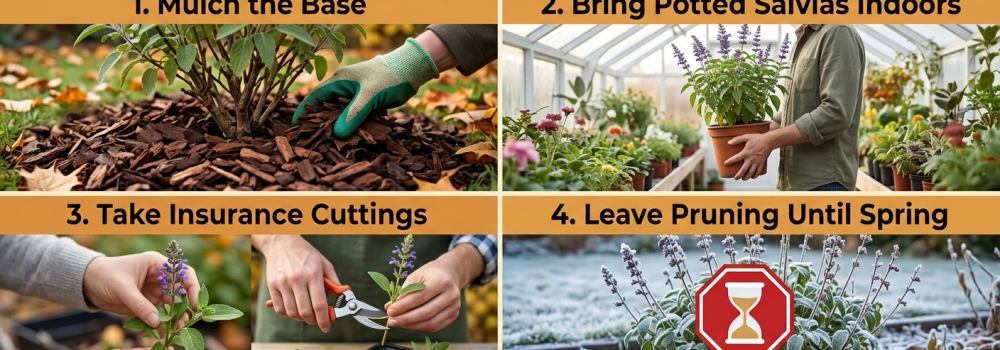
- ✓Cut back in early spring once new shoots appear at the base — typically February or March
✗ What not to do
- ✗Don’t cut back in autumn
- ✗Don’t cover with fleece — UK winters rarely get cold enough to require it
- ✗Don’t worry — these are genuinely reliable plants
Semi-Hardy Salvias — Managed Overwinter
Salvia microphylla & greggii — RHS H3–H4
Whether these survive depends on your location, drainage and winter severity. In a sheltered south or west-facing garden with free-draining soil, many will come through with nothing more than a mulch. Browse our microphylla range to see variety-specific frost tolerance.
For plants in the ground
Apply a generous mulch of garden compost, leaf mould or bark chippings around the base — at least 10cm deep, covering the crown. Leave the stems on for additional protection. Don’t cut back until new growth appears in spring. In a severe winter forecast, add horticultural fleece over the crown, removing on milder days for air circulation.
For plants in pots
Move to the most sheltered spot available — against a south or west-facing wall, in a porch, or under a greenhouse bench. Raise the pot off the ground on pot feet. Wrap the pot in bubble wrap or hessian to insulate roots from freeze-thaw cycles. Reduce watering but don’t let the compost dry out completely.
Tender Salvias — Action Required Before First Frost
Guaranitica, patens, uliginosa, involucrata — RHS H1–H2
These will not survive frost in open ground. Action needed in September or October at the latest. You have three options:
Take Cuttings Most reliable
Semi-ripe cuttings taken in August and September give you rooted plants before the first frosts and more plants for the following season. Young rooted plants are much easier to overwinter — they take up less space and are less prone to rot. See our full step-by-step salvia cuttings guide.
Move the Whole Plant Under Cover
Move pot-grown plants into a frost-free space before the first frost — a garage, unheated greenhouse, conservatory or enclosed porch all work. Cut back by a third before moving. Keep barely moist through winter; the plant will go largely dormant. Move back outside once frost risk passes in late spring.
Lift and Store Tubers Salvia patens only
Salvia patens forms tubers similar to dahlias. After the first frost blackens the foliage, cut back to 10cm and carefully lift the tubers. Dry for a day or two then store in a paper bag or tray of barely damp compost in a frost-free space. Replant in April. Browse our tender salvia range for more on tuber-forming species.
The Autumn Checklist
All Salvias
- ✓Check drainage around in-ground plants — improve before winter wet sets in
- ✓Leave stems on for crown protection — don’t cut back until spring
Semi-Hardy
- ✓Apply 10cm mulch of compost or leaf mould around the crown
- ✓Move pots to a sheltered position and raise off the ground
- ✓Wrap pots in bubble wrap or hessian
Tender
- ✓Take cuttings by end of September if not already done
- ✓Move pot-grown plants under cover before first frost
- ✓Cut back by a third before moving under cover
- ✓Lift Salvia patens tubers after first frost blackens foliage
Shop Hardy and Reliable Salvias
If winter losses have put you off salvias before, the answer is often simply to start with fully hardy varieties that need no autumn attention at all. Our Salvia nemorosa range is entirely frost-hardy, drought-tolerant, and will return reliably year after year.
Frequently Asked Questions
How do I overwinter salvias in the UK?
Overwintering salvias in the UK depends on the type. Fully hardy salvias like nemorosa and sylvestris need no winter protection — simply leave the stems on and cut back in spring once new growth appears. Semi-hardy microphylla and greggii benefit from a generous mulch over the crown and, if in pots, moving to a sheltered position. Tender salvias including guaranitica and patens need to be either propagated from cuttings taken in August or September, moved under cover before the first frost, or — in the case of patens — have their tubers lifted and stored.
Will salvias survive winter in the UK?
Fully hardy salvias like Salvia nemorosa will survive UK winters without any protection, including in Scotland and exposed northern gardens. Semi-hardy salvias like Salvia microphylla will survive in many UK gardens — particularly in the south and west — with a mulch for protection, but may be lost in severe winters or cold, exposed sites. Tender salvias like Salvia guaranitica will not survive frost without protection. The RHS salvia guide provides hardiness ratings for all main species.
When should I cut back salvias for winter?
Don’t cut back salvias in autumn. Leave the old stems on through winter — they provide insulation to the crown below and habitat for overwintering insects. Cut back in early spring, once you can see new shoots emerging at the base, typically February or March. Cutting back in autumn removes this protection and exposes the crown to frost and wet at the most vulnerable time of year.
What is the best mulch for salvias in winter?
Garden compost, leaf mould and bark chippings all work well as a winter mulch for salvias. Apply at least 10cm deep around the base of the plant, covering the crown. Apply in October before the worst of the winter weather arrives. Avoid mulching right up against the stems — leave a small gap to allow air circulation and reduce the risk of rot at the base.
Can I leave salvia microphylla outside in winter in the UK?
In many UK gardens, yes — particularly in sheltered, south or west-facing plots with free-draining soil. Salvia microphylla is rated RHS H3–H4, meaning it will survive mild winters with a mulch for protection but may be lost in a severe winter or on a frost pocket. In colder or more exposed gardens, the safest approach is to take cuttings in August or move pot-grown plants under cover. Browse our Salvia microphylla range to see variety-specific frost tolerance notes.
How do I overwinter salvia guaranitica?
Salvia guaranitica is tender and will not survive frost outdoors. The three options are: take semi-ripe cuttings in August or September and overwinter them on a frost-free windowsill; move the pot under cover before the first frost, cutting back by a third first; or in milder areas, cut back hard and apply a very deep mulch over the crown as a gamble — this sometimes works in sheltered southern gardens but is not reliable. Taking cuttings is the most reliable method. See our full guide on how to take salvia cuttings.