
TL;DR
- The best time to take salvia cuttings is late summer — August and September — when growth is semi-ripe
- Softwood cuttings can also be taken in May and June from fresh new growth
- Take cuttings from non-flowering stems, 8–12cm long, just below a leaf node
- Root in gritty, free-draining compost in a warm, bright spot — not full sun
- Overwinter rooted cuttings in a frost-free place and pot on in spring
Introduction
Knowing how to take salvia cuttings is the most practical skill a salvia grower can have. It lets you multiply your favourite varieties for free, overwinter tender and semi-hardy plants reliably, and share plants with other gardeners — all from a few minutes’ work in late summer.
The RHS salvia cuttings guide confirms what we’ve found at Middleton Nurseries over decades: salvias root readily from cuttings with very little specialist equipment. You don’t need a heated propagator or a greenhouse. A warm windowsill, a small pot of gritty compost and a clear plastic bag are enough to get started.
This guide covers everything from timing and technique to rooting, overwintering and potting on — so your cuttings make it through to strong, flowering plants the following season.
Quick Facts
| Best time | August–September (semi-ripe); May–June (softwood) |
| Cutting length | 8–12cm |
| Where to cut | Just below a leaf node, from a non-flowering stem |
| Rooting medium | 50/50 peat-free multipurpose and perlite or horticultural grit |
| Rooting time | 3–5 weeks at 18–20°C |
| Overwinter | Frost-free — minimum 3–5°C |
| Pot on | March–April once new growth appears |
August & September — Semi-Ripe
The primary and most reliable window. Growth has firmed up slightly — no longer soft and floppy but not yet fully woody. Firm enough to handle without wilting, soft enough to root quickly. Timed perfectly to give rooted plants before the first frosts. The RHS recommends this window as the most reliable for salvias.
May & June — Softwood
Cuttings from fresh new growth root faster but are more prone to wilting before they establish. Require more attention — keep humid and out of direct sun. A useful option if you want to build up stock quickly in early summer.
What You’ll Need
- ✓Sharp, clean scissors or secateurs — clean blades prevent disease entering the wound
- ✓Small pots, 9cm diameter — one per cutting or 3–4 cuttings per 15cm pot
- ✓Cuttings compost: 50/50 peat-free multipurpose and perlite or horticultural grit
- ✓Clear plastic bags or a propagator lid
- ✓Rooting hormone powder or gel — optional but improves strike rate
- ✓A warm, bright windowsill or unheated greenhouse
Step-by-Step: Taking the Cuttings
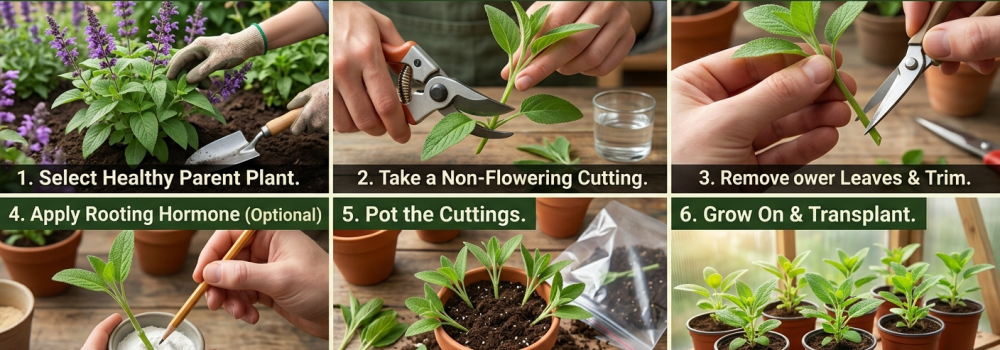
Choose the Right Stems
Look for non-flowering stems with healthy, compact growth. Flowering stems divert energy into seed production rather than root formation — always remove any flower buds before you do anything else. Choose stems from the outer edges of the plant where growth tends to be most vigorous.
Take the Cutting
Cut a stem 8–12cm long, making a clean cut just below a leaf node — the point where a leaf joins the stem. Use sharp, clean scissors or secateurs. A ragged cut increases the risk of disease entering the wound.
Prepare the Cutting
Remove the lower leaves, leaving two or three pairs at the top. Lower leaves left on will rot in the compost and can introduce disease. If the remaining leaves are large, cut them in half horizontally to reduce water loss while the cutting has no roots to draw on.
Rooting Hormone Optional
Dip the cut end into rooting hormone powder or gel. This isn’t essential — salvias are willing rooters — but it does improve the strike rate and speeds up rooting, particularly for tougher semi-ripe cuttings. Tap off any excess powder.
Insert into Compost
Make a small hole with a pencil or dibber — don’t push the cutting directly in, as this can scrape off the rooting hormone and damage the stem. Insert to about a third of its length and firm gently. Space cuttings so leaves don’t touch each other.
Water In and Cover
Water gently from above to settle the compost, then allow to drain. Place a clear plastic bag over the pot secured with an elastic band, or use a propagator lid. This keeps humidity high around the cutting while it establishes. Label clearly — salvia varieties look very similar as young cuttings.
After Taking Cuttings — Care Until Rooted
Place the pot in a warm, bright spot — a windowsill is ideal, but avoid direct sun which can scorch through the plastic. Check every few days and remove any cuttings showing signs of rot promptly. Open the bag briefly each day for air circulation to reduce fungal risk.
Rooting typically takes 3–5 weeks at 18–20°C. You’ll know a cutting has rooted when it begins to push new leaves. You can also check by gently tugging — if it resists, roots have formed.
❄ Overwintering Rooted Cuttings
Keep tender varieties (microphylla, greggii, guaranitica) in a frost-free space at a minimum of 3–5°C — a frost-free garage, unheated porch, conservatory or greenhouse all work. Keep barely moist through winter; overwatering causes root rot. Water once every two to three weeks. In mild southern gardens, semi-hardy varieties can overwinter in a cold frame with fleece protection.
🌿 Potting On in Spring
In March or April, once new growth appears, pot on into a 1 or 2 litre pot with peat-free compost and added grit. Pinch out growing tips at 15cm to encourage a bushy habit. Harden off over two weeks before planting out — move outside during the day and bring in at night. Don’t plant out tender varieties until after the last frost, typically late May.
Which Salvias Root Best from Cuttings?
Salvia microphylla, Salvia greggii, Salvia guaranitica — root reliably from semi-ripe cuttings in August with minimal intervention. Browse our microphylla range to find varieties worth propagating.
Salvia patens, Salvia uliginosa — root well but benefit from slightly warmer conditions. A heated propagator helps in autumn.
Shop Salvias Worth Propagating
The best varieties to take cuttings from are the ones you love most. Browse our full range at Middleton Nurseries — all grown at our Staffordshire nursery using peat-free compost.
Frequently Asked Questions
When is the best time to take salvia cuttings in the UK?
August and September are the primary window for taking salvia cuttings in the UK. At this point the growth is semi-ripe — firm enough to handle without wilting but soft enough to root readily. The timing also means rooted cuttings are ready before the first frosts, which is essential for overwintering tender varieties like microphylla, greggii and guaranitica. Softwood cuttings can also be taken in May and June from fresh new growth. The RHS salvia cuttings guide recommends August and September as the most reliable window.
Do salvia cuttings need a heated propagator?
No — salvias root readily without specialist equipment. A clear plastic bag over the pot creates enough humidity to support rooting on a warm windowsill. A heated propagator does improve strike rates and speeds up rooting, particularly for cuttings taken later in the season when temperatures are dropping, but it isn’t essential for most species.
How long do salvia cuttings take to root?
Typically 3–5 weeks at 18–20°C. You’ll know a cutting has rooted when it begins to push new leaves — an unrooted cutting stays static. If you’re unsure, gently tug the cutting: resistance means roots have formed.
Can I take cuttings from flowering salvia stems?
It’s better to avoid it. Flowering stems put energy into seed production rather than root formation, which reduces the strike rate. Always take cuttings from non-flowering stems and remove any flower buds from the cutting before inserting into compost.
How do I overwinter salvia cuttings?
Once rooted, move to a frost-free location — a minimum of 3–5°C. A frost-free garage, unheated porch, conservatory or greenhouse all work well. Keep barely moist through winter; overwatering is the main cause of losses at this stage. Pot on in March or April once new growth appears.
Can I take cuttings from all salvia varieties?
Most salvias root readily from cuttings. Some varieties are protected by Plant Breeders’ Rights (PBR), which restricts propagation for sale or distribution — always check the label. Growing cuttings for your own garden use is generally permitted regardless of PBR status.