

Salvia Nemorosa — Hardy Perennial Salvias for UK Gardens
Salvia nemorosa is the most reliably hardy salvia you can grow in a UK garden — fully frost-hardy, drought-tolerant, and loved by bees and butterflies. At Middleton Nurseries we grow one of the UK’s largest ranges of nemorosa varieties, all grown in our Staffordshire nursery using peat-free compost and dispatched nationwide.
Quick Facts
Varieties by Colour
Blue & Purple Varieties
The most popular nemorosa colours — classic border blues from deep indigo to soft lavender. Our standout varieties: Caradonna (near-black stems, violet-blue — the definitive border salvia), East Friesland (rich purple, compact habit), Crystal Blue (pale sky-blue, early flowering), Blue Marvel, New Dimension Blue and Sensation Compact Deep Blue.
Pink Varieties
Softer and increasingly popular, pink nemorosa adds warmth to mixed borders and works beautifully alongside blues. Top picks: Pink Friesland, Rose Marvel, Sensation Rose, Feathers Flamingo, Caradonna Pink Inspiration and Sensation Compact Bright Rose.
White Varieties
Clean and elegant — white nemorosa works beautifully with blue and purple forms. Our white range includes Salute White, Lyrical White, Sensation Compact White and Schneehugel Snowhill.
Compact & Dwarf Varieties
Perfect for containers, front-of-border and small gardens. The Sensation series (20–30cm) are among the most compact available — ideal for pots. Also look at Spring King, Malta and Jersey.
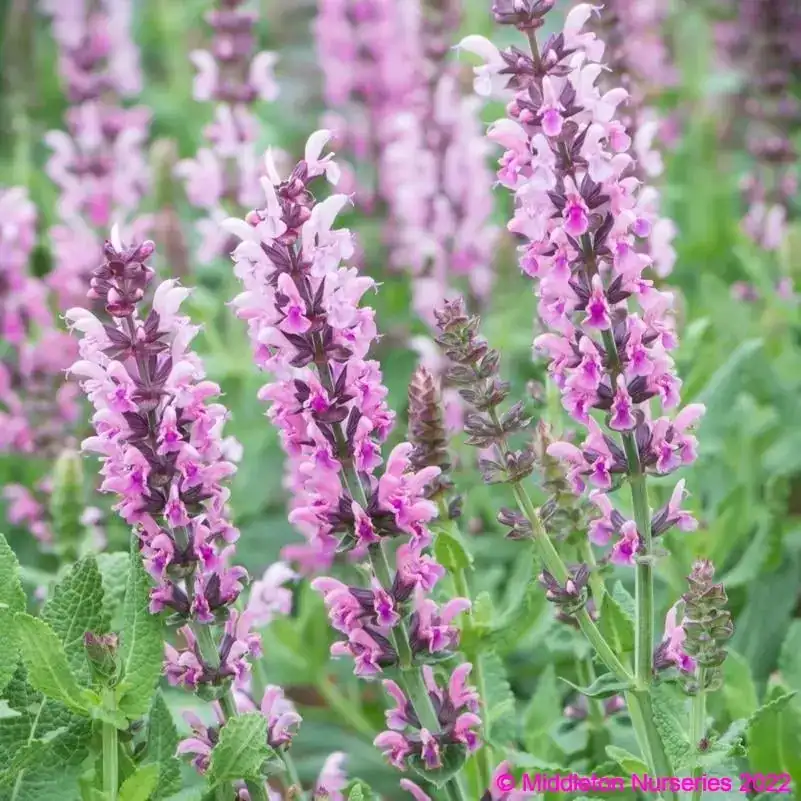
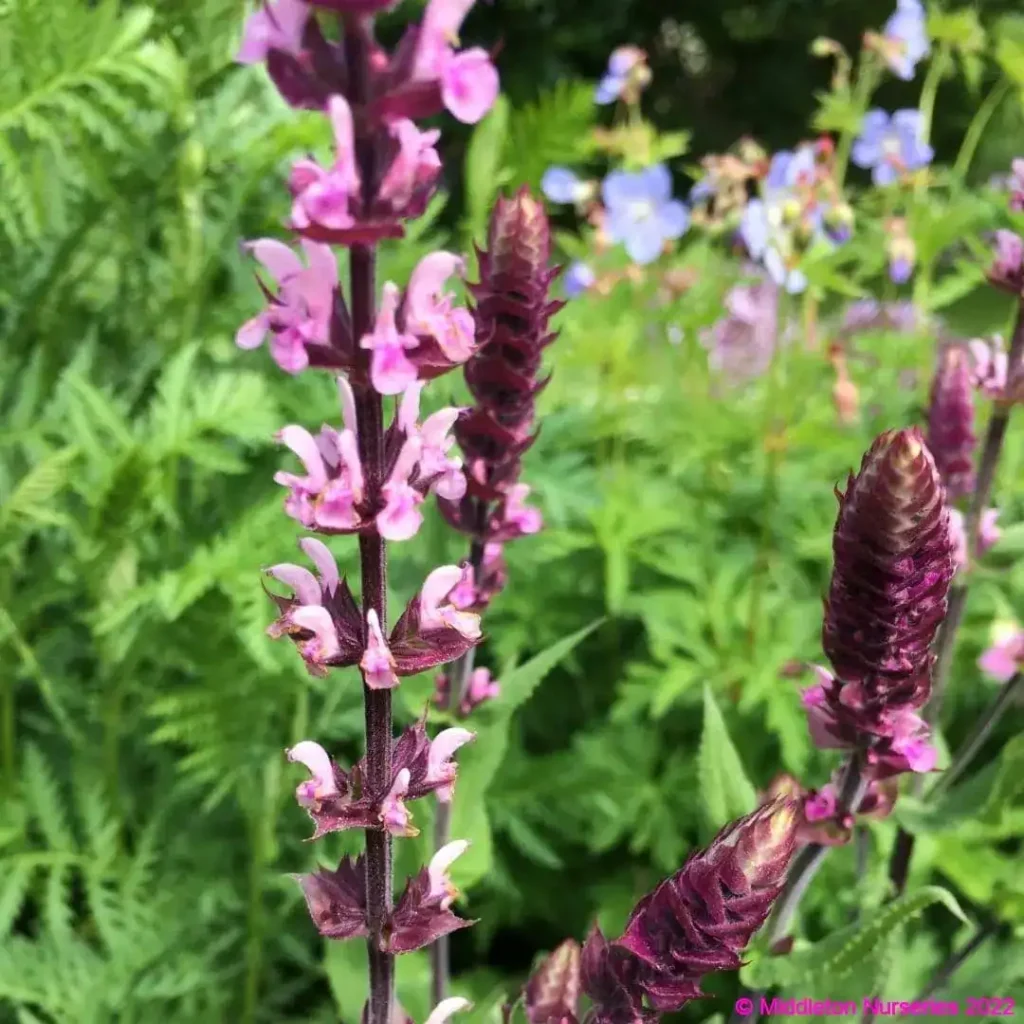

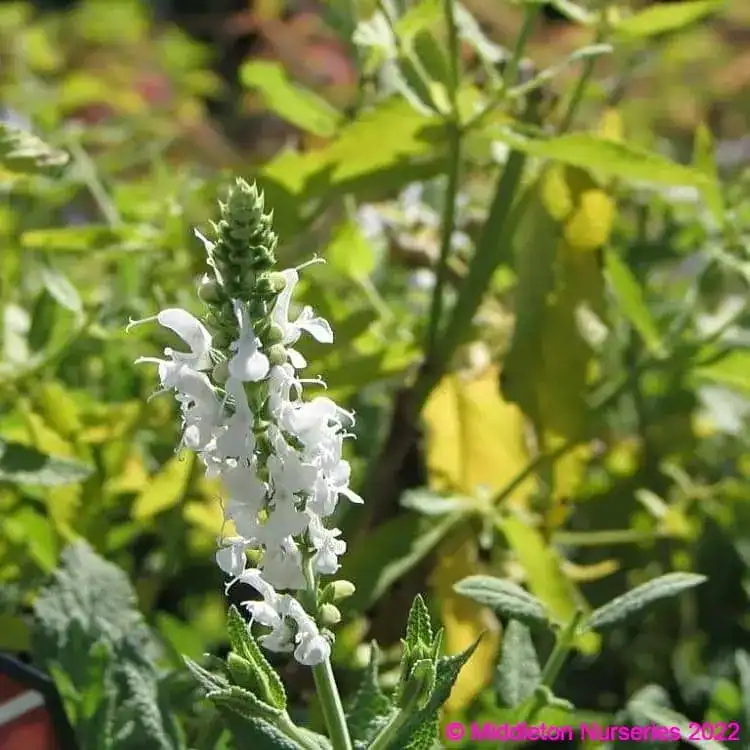
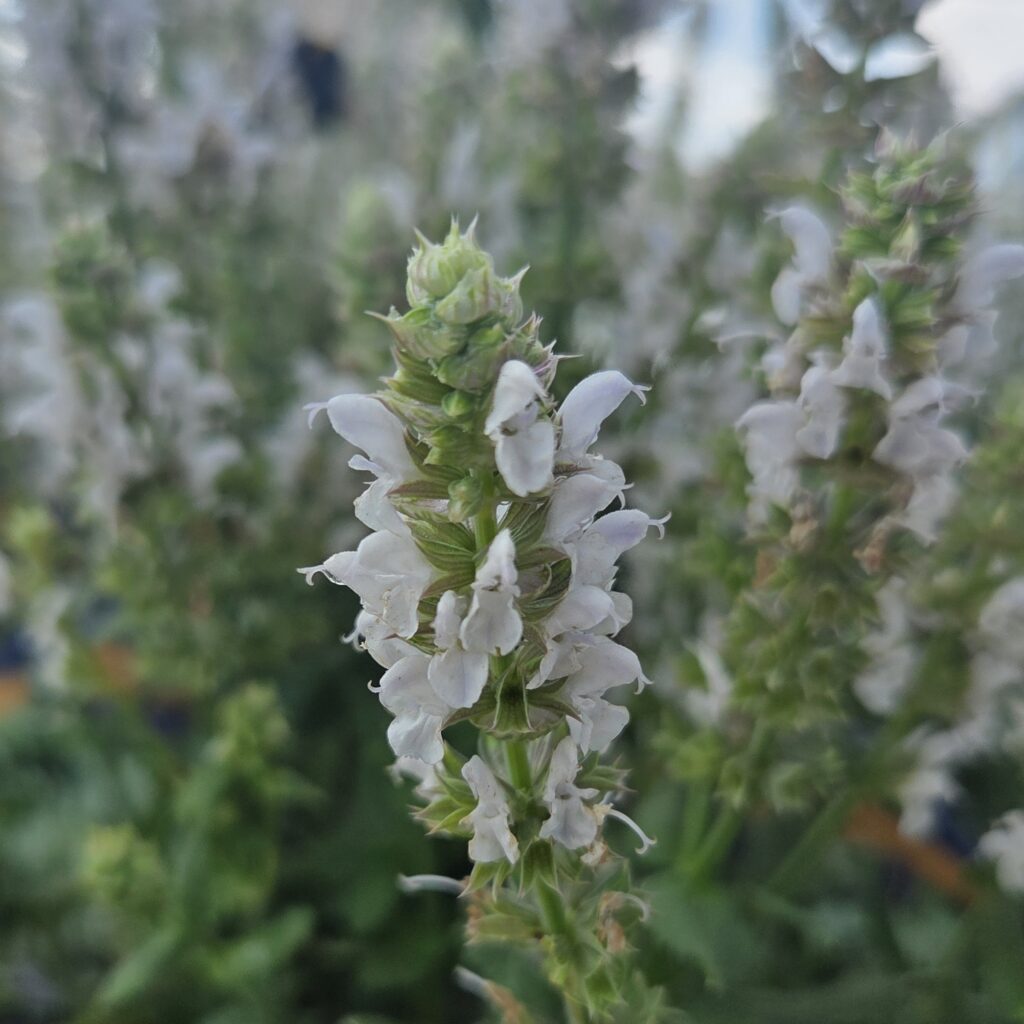
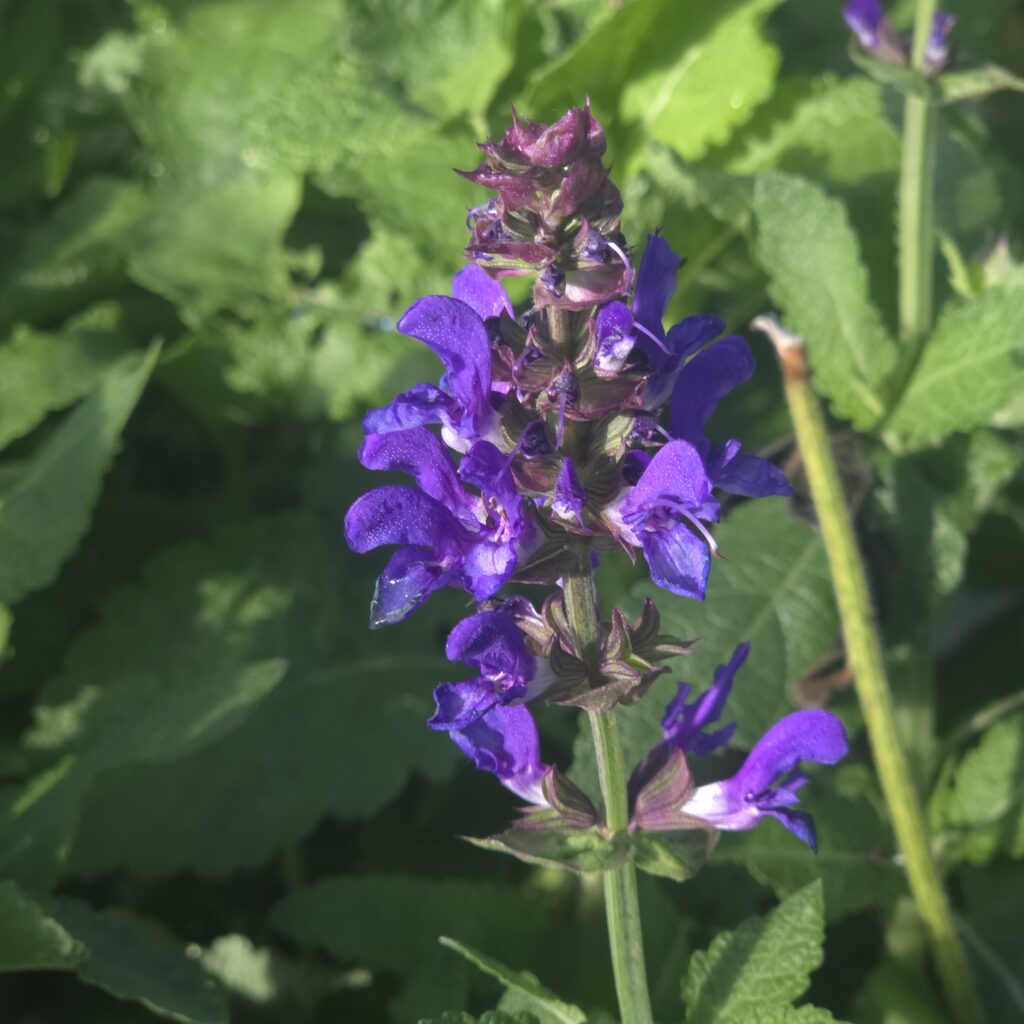
All our salvia nemorosa plants are grown in our Staffordshire nursery using peat-free compost — healthy, well-established and ready for your garden.
How to Grow Salvia Nemorosa in the UK
Planting
Plant in full sun in well-drained soil. Nemorosa tolerates clay if not waterlogged. Space plants 30–45cm apart. Water in well after planting — established plants are remarkably drought-tolerant and need very little watering once settled.
The Hampton Chop
After the first flush fades in July, cut plants back by around two-thirds. This triggers a second flush of blooms in September and October — effectively doubling your flowering season. Named after the technique popularised at RHS Hampton Court.
Overwintering
Leave top growth on through winter — it protects the crown from frost. Cut back to the base in early spring when new growth appears. Nemorosa is fully hardy (RHS H6) and will survive even harsh UK winters without any protection.
Feeding & Maintenance
Nemorosa is low-maintenance and doesn’t need heavy feeding. A light mulch of well-rotted compost in spring is sufficient. Avoid high-nitrogen feeds which produce leafy growth at the expense of flowers. Divide established clumps every 3–4 years to keep them vigorous.
Frequently Asked Questions
What is the difference between Salvia nemorosa and Salvia x sylvestris?
Salvia nemorosa is a species native to central Europe and western Asia. Salvia x sylvestris is a hybrid between nemorosa and Salvia pratensis. In practice the two are very similar in garden performance — both are fully hardy, long-flowering border perennials. Many popular varieties sold as nemorosa are actually sylvestris hybrids.
Is Salvia nemorosa fully hardy in the UK?
Yes — Salvia nemorosa is rated RHS H6, meaning it is fully hardy throughout the UK and will survive temperatures down to -20°C. No winter protection is needed. Leave old growth on the plant through winter as it protects the crown, then cut back in early spring.
When does Salvia nemorosa flower?
The main flowering season is late May through July. If you cut plants back after the first flush (the Hampton Chop), you will typically get a strong second flush of flowers in September and October.
How do I get a second flush from Salvia nemorosa?
Use the Hampton Chop — cut plants back by around two-thirds once the first flush of flowers fades in July. New growth will appear quickly and the plant will flower again strongly in autumn. Make sure to water and feed lightly after cutting back.
What are the best Salvia nemorosa varieties for small gardens?
The Sensation series are the most compact nemorosa available, growing to just 20–30cm. They are ideal for pots, containers and front-of-border planting. Spring King, Malta and Jersey are also compact choices. For classic border impact in a small space, Caradonna remains the best all-rounder.

How to Care for Salvia Nemorosa
How do I prune Salvia nemorosa?
Salvia nemorosa should be left through the winter, as the dead wood protects the crown from frost. In early spring, cut back to the base once new shoots appear. More vigorous Salvia nemorosa varieties can be trimmed again around June to encourage a second flush of flowers in late summer.
What are the common pests and diseases affecting Salvia nemorosa?
Salvia nemorosa is generally very trouble-free. Aphids, capsid bugs, whitefly, sage leafhoppers and glasshouse red spider mites can occasionally affect plants. Fungal issues like grey mould (Botrytis) can develop in cool, damp conditions, especially during overwintering. Good drainage and air circulation prevent most problems.
How often should I water Salvia nemorosa?
Water Salvia nemorosa regularly during dry spells, particularly newly planted ones. Established Salvia nemorosa is drought-tolerant but benefits from deep watering during prolonged hot periods. Avoid waterlogging, as it can cause root rot — good drainage is essential.
Does Salvia nemorosa need feeding?
Salvia nemorosa requires only light feeding. A balanced slow-release fertiliser or compost mulch in spring is sufficient for hardy varieties. Tender salvias benefit from liquid feeding every 2–4 weeks during the growing season. Avoid over-fertilising — this encourages leafy growth at the expense of flowers.
Should I deadhead or cut back Salvia nemorosa?
Salvia nemorosa should be trimmed around April or May once new shoots appear — cut back to the fresh growth to encourage a bushier, more floriferous plant. More vigorous Salvia nemorosa varieties can be pruned again in July to encourage a second flush. Do not cut back in autumn — leaving the foliage intact helps protect the plant from frost.
How do I propagate Salvia nemorosa?
Salvia nemorosa can be propagated from cuttings, seeds, or by division. Softwood cuttings can be taken in summer, or semi-ripe cuttings in late summer — remove the lower leaves, dip in rooting hormone and plant in a free-draining medium. Clump-forming Salvia nemorosa varieties can be divided every 3–4 years in early spring or autumn.
Is Salvia nemorosa drought-hardy
Yes — Salvia nemorosa is one of the most drought-tolerant perennials for UK gardens. Once established it thrives in well-drained soil and full sun with minimal watering, making it ideal for dry sunny borders. Tender salvias are less drought-tolerant and require more consistent watering.
What are the best salvias for UK gardens?
Hardy Salvia nemorosa cultivars are among the most recommended perennials for UK gardens due to their long flowering season and adaptability to various soil conditions. Top varieties include ‘Caradonna’ with its striking near-black stems, ‘Mainacht’ (May Night) for deep violet-blue, and ‘Ostfriesland’ (East Friesland) for rich purple — all reliable, fully hardy choices for British borders.
For expert growing advice, visit the Royal Horticultural Society’s Salvia guide or our own Complete Salvia Care Guide.