TL;DR
- Salvia microphylla is the longest-flowering salvia you can grow in a UK garden — many varieties bloom from May to the first frosts
- Semi-hardy (RHS H3–H4) — survives mild UK winters in sheltered gardens, needs protection in colder areas
- Full sun and free-draining soil are essential; waterlogging is the main cause of losses
- Light pruning in spring and deadheading through the season keeps plants bushy and flowering
- Dozens of varieties available — from the iconic ‘Hot Lips’ to rarer species selections
Introduction
Salvia microphylla is the longest-flowering salvia you can grow in a UK garden, and for many gardeners it becomes the variety they keep coming back to year after year. The combination of a genuinely long season — May right through to the first frosts in most years — with compact, bushy growth and colours that range from pure white through to near-black red makes it one of the most versatile plants in the summer border.
At Middleton Nurseries we grow one of the UK’s widest ranges of Salvia microphylla, from well-established favourites like ‘Hot Lips’ through to rarer species selections that most gardeners have never seen. This guide covers everything you need to grow microphylla well — varieties, soil, pruning, overwintering and the common mistakes to avoid.
Quick Facts
| Common name | Mountain sage |
| Hardiness | RHS H3–H4 — semi-hardy; survives mild winters in sheltered gardens |
| Position | Full sun; tolerates light partial shade but flowers less freely |
| Soil | Free-draining; tolerates poor soil; dislikes waterlogging |
| Flowering season | May to first frosts — one of the longest seasons of any garden plant |
| Height | 60–120cm depending on variety and growing conditions |
| Key care | Light prune in spring; deadhead regularly; take cuttings in August for overwintering |
| Pollinators | Excellent — bees and butterflies particularly |
The Best Salvia microphylla Varieties
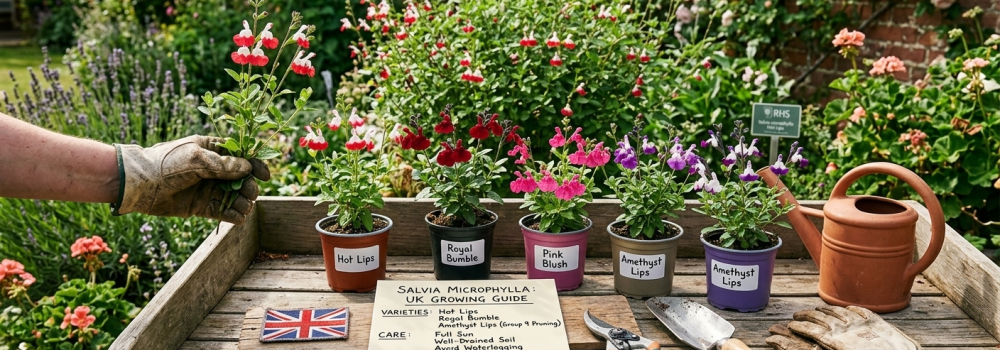
Salvia greggii ‘Hot Lips’
The iconic bicolour — red & white
The most recognised microphylla variety. Shifts between fully red, fully white and bicolour through the season depending on temperature — giving it a dynamism that single-colour varieties don’t have. Bushy, compact at 60–80cm, reliably long-flowering.
Buy Hot Lips →Salvia microphylla ‘Jezebel’
Deep cerise — long season
Rich, deep cerise-pink that holds its colour well without fading. Compact and bushy at around 60cm, reliably floriferous, strong in both border and container situations. The single-colour alternative to Hot Lips.
Salvia microphylla ‘Cerro Potosi’
Soft magenta — naturalistic habit
A more spreading, open habit than most microphylla — 80–100cm with an airy appearance. Soft magenta flowers particularly effective with ornamental grasses. One of the best for naturalistic planting.
Salvia microphylla ‘Royal Bumble’
Bold scarlet — strong vigour
Pure, saturated scarlet with strong vigour and an upright habit. Slightly larger than other microphylla at 90–120cm. Particularly effective against grey stone or white painted walls.
Salvia microphylla ‘Pink Lips’
Bicolour in pink & white — cottage garden favourite
The same bicolour dynamism as ‘Hot Lips’ but in soft pink and white — a more restrained palette that works particularly well in cottage garden schemes. Same bushy habit and excellent long flowering season as the rest of the Lips series.
Buy Pink Lips →Growing Salvia microphylla in the UK
Soil and Position
Free-draining soil and full sun are the two non-negotiables. This is a plant from the mountains of Mexico — evolved for drought, poor soil and intense sun. It performs best when UK gardens reflect those origins.
Heavy, moisture-retentive clay is the main challenge. Improve drainage before planting by incorporating sharp grit or perlite, or grow in containers using a free-draining mix of peat-free multipurpose and 20% grit. Waterlogged roots in winter are more damaging than frost in most cases. Full sun is ideal — microphylla tolerates a couple of hours of shade but won’t tolerate heavy shade, producing floppy growth and far fewer flowers.
Feeding and Watering
Once established, microphylla is surprisingly drought-tolerant. Water regularly in the first season to help the plant establish — by year two it can rely largely on rainfall except during extended dry spells.
Feed with a high-potash liquid fertiliser fortnightly from May to September. This supports flower production rather than leafy growth. Avoid high-nitrogen feeds — they produce lush, soft growth that’s more vulnerable to frost and gives you fewer flowers.
Pruning
Spring
Once new growth appears at the base — typically April or May — cut back to just above the new shoots. Don’t cut back in autumn; old stems protect the crown. See RHS salvia care guidance for detail.
Through the Season
Deadhead every two to three weeks through summer and early autumn — cutting back to a leaf node rather than just removing the spent flower. This extends the season and keeps the plant bushy and productive.
Hardiness and Overwintering
Salvia microphylla is rated RHS H3–H4 — borderline hardy. Whether it survives winter depends on your location, drainage and how cold the winter is.
Sheltered south or west
Apply a generous mulch of garden compost or bark chippings in October. Leave stems on for extra protection. Cut back in spring once new growth appears.
Cold or exposed gardens
Take semi-ripe cuttings in August and overwinter in a frost-free space. See our salvia cuttings guide for the full process.
Pot-grown plants
Move to a sheltered spot before first frost. Wrap pots in bubble wrap or hessian. Full detail in our overwintering guide.
Salvia microphylla vs Salvia greggii — What’s the Difference?
The boundary between the two is blurry — many plants sold under one name are hybrids of both, and growing requirements are identical. ‘Hot Lips’ is technically a greggii, for example. For practical purposes, treat them the same way.
Salvia microphylla
Slightly rounder leaves and a more spreading, open habit. Often the bushier of the two in garden conditions.
Salvia greggii
Slightly more upright with narrower leaves. Tends to be a little more compact in habit. Includes the iconic ‘Hot Lips’.
Browse Our Salvia microphylla Range
We grow one of the UK’s widest ranges of Salvia microphylla and greggii varieties at our Staffordshire nursery — all grown in peat-free compost and dispatched nationwide.
Frequently Asked Questions
Is Salvia microphylla hardy in the UK?
Salvia microphylla is semi-hardy in the UK — rated RHS H3–H4. It will survive mild winters in sheltered, south or west-facing gardens with free-draining soil, typically with a mulch for protection. In colder, more exposed or northern gardens it’s more likely to be lost in a hard winter. The safest approach in colder areas is to take cuttings in August and overwinter them in a frost-free space. Browse our Salvia microphylla range to find the most frost-tolerant varieties.
How long does Salvia microphylla flower for?
Salvia microphylla has one of the longest flowering seasons of any garden plant — in most UK gardens it flowers from May right through to the first frosts, often into November in mild years. Regular deadheading — removing spent flower spikes every two to three weeks — significantly extends the season and keeps the plant producing new flowers rather than setting seed.
When should I prune Salvia microphylla?
Prune in spring, once you can see new growth emerging at the base — typically April or May. Cut back to just above the new shoots. Don’t cut back in autumn as the old stems provide frost protection to the crown. Through the growing season, regular deadheading every two to three weeks extends flowering and keeps the plant bushy. The RHS salvia growing guide has further detail on pruning timing.
What is the difference between Salvia microphylla and Salvia greggii?
Microphylla and greggii are closely related species with almost identical growing requirements. In general, microphylla has slightly rounder leaves and a more spreading habit, while greggii is slightly more upright with narrower leaves. Many plants sold under either name are in fact hybrids of both. For practical purposes, treat them identically — the same soil, pruning and overwintering approach applies to both.
What is the best Salvia microphylla for pots?
Compact varieties like ‘Hot Lips’, ‘Jezebel’ and ‘Pink Lips’ all perform well in pots. Use a free-draining compost mix — 50/50 peat-free multipurpose and perlite or grit — and feed fortnightly with a high-potash liquid feed from May to September. For more detail on growing microphylla in containers, see our guide on best salvias for pots UK.
Can Salvia microphylla grow in shade?
Salvia microphylla tolerates light partial shade — a couple of hours without direct sun — but it flowers significantly less freely than in full sun. In heavy or sustained shade it produces elongated, floppy growth and very few flowers. For best results, full sun or a position with at least five to six hours of direct sun per day is strongly recommended.