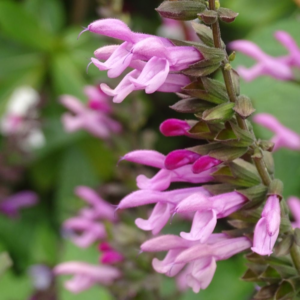
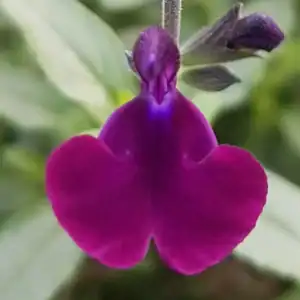
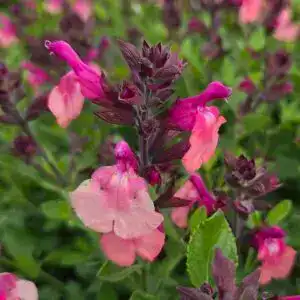
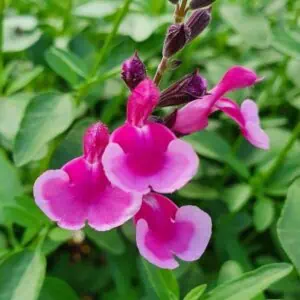
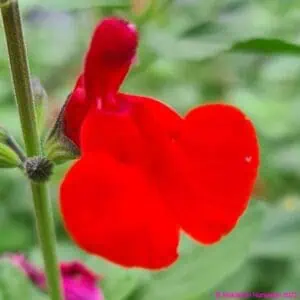
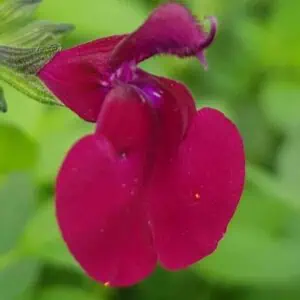
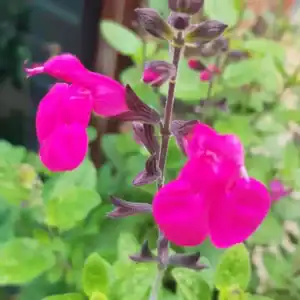
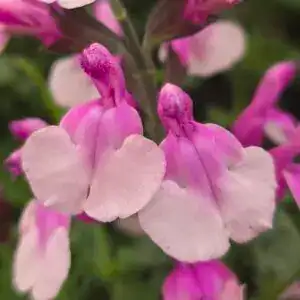
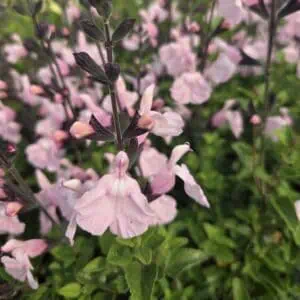
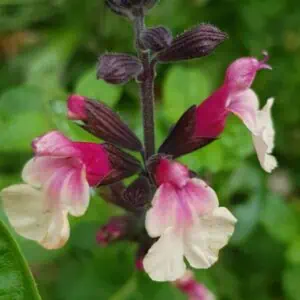
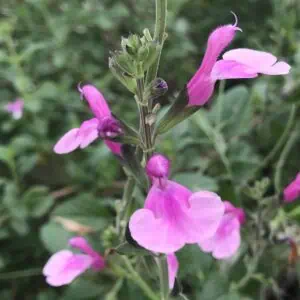
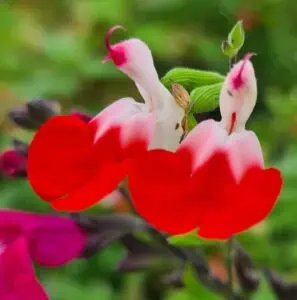
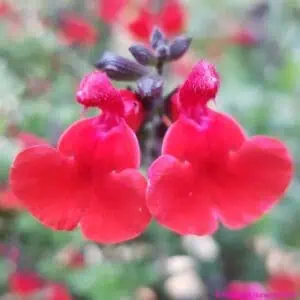
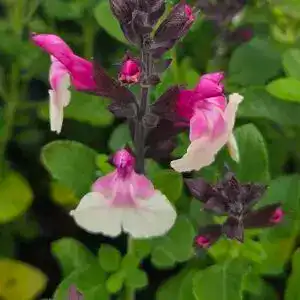
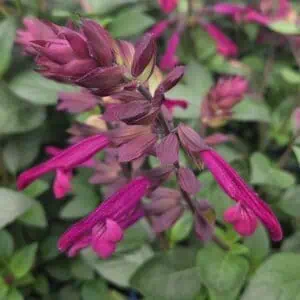
Salvia microphylla ‘Heatwave Blaze’ is a bushy salvia with deep red flowers and green foliage, blooming from summer into autumn. Bees enjoy salvias of this type, and regular deadheading encourages a second round of blooms.
Deep red is a strong colour, so it rewards good partners such as silver-leaved shrubs, blue catmint and soft grasses. It is equally suited to the border and to a large pot, so use it wherever you need a hot spot of colour in full sun.
Plant it in a sheltered, sunny position in well-drained soil; light shade is tolerated. The hardiness rating is H4, which means it is hardy in most places (-10 to -5C), and protection is typically needed only in exceptionally severe frost. The RHS notes that Salvia microphylla types may need protection from excessive winter wet and suit a south or west-facing aspect. Plant in spring, in mid-April and May, or in autumn. Water well after planting and during dry spells in the first growing season. Established salvias are described by the RHS as drought tolerant and dislike continually wet soil, and plants in pots need more frequent watering than those in the ground.
Deadhead regularly through summer, cutting spent flowers back. Prune the whole plant in mid-spring (late March to April), taking it back to about 10cm if you want to keep it compact. We grow our plants at our family nursery in Staffordshire and send each ‘Heatwave Blaze’ as a young plant, ready to grow on, in a choice of pot sizes.

Free delivery over £59.99
Seasonal availability helps us send plants at their best
More plants in red to go with this one.
Planting and flowering times are general guidelines and vary with your location and conditions.
Deadhead regularly through summer, as Middleton recommends, cutting spent flowers back to encourage a second round of blooms. Prune the whole plant in mid-spring (late March to April), taking it back to about 10cm if you want to keep it compact.
Water well after planting and during dry spells in the first growing season. Established salvias are described by the RHS as drought tolerant and dislike continually wet soil, so allow the soil to dry a little between waterings. Plants in pots need more frequent watering than those in the ground.
Plant in a sheltered, sunny position in well-drained soil, ideally in spring (mid-April and May) or autumn. The RHS gives a south- or west-facing aspect for Salvia microphylla types and notes they may need protection from excessive winter wet. Middleton says protection is typically needed only in exceptionally severe frost.
Rated on Trustpilot by Middleton Nurseries customers.
“Swift delivery of good quality plants. They’ve established well.”
Julie · Verified review on TrustpilotGrowing“Lovely plants which arrived in great condition. Salvias which I planted late last year survived the dreadful drought and heat this summer while plants from other suppliers did not. Proves the quality of what Middleton supply.”
Jennymay · Verified review on TrustpilotQuality“A very wide choice available. The plants arrived well packaged, were healthy and well grown. I would buy again from this nursery.”
Sutton Customer · Verified review on TrustpilotService“Great quality plants and outstanding customer service. Thank you.”
Lucy Mann · Verified review on TrustpilotYes, regular deadheading is recommended to encourage a second round of flowering. Middleton specifically advises it for this plant, and the RHS says to cut back spent flowers on Salvia microphylla types to prolong flowering. Cut just below the faded flower spike.
Yes, Middleton describes it as a magnet for bees. The RHS Salvia microphylla species page carries the Plants for Pollinators badge, and the RHS growing guide says salvias in general attract pollinators such as bees. Deadheading to keep new flowers coming also extends the nectar supply.

No, shrubby Salvia microphylla types should not be cut to ground level. The RHS advises pruning the woody stems to about 10cm in spring, which leaves a framework of buds to shoot from. Cutting into bare old wood risks leaving the plant slow to recover.
The species is described by the RHS as an evergreen shrub, so Salvia microphylla types usually hold their leaves through mild winters. Hard frost can scorch or strip the foliage, but plants often reshoot from the base in spring once you remove any dead stems.
Wrap the plant in horticultural fleece, which the RHS recommends for shrubby salvias in cold regions or harsh winters. Heavier fleece gives roughly 2°C of protection. Middleton says this variety typically needs help only in exceptionally severe frost, and a mulch over the base adds extra cover.
Stay in the loop with exclusive promotions, news, and updates. Sign up now and enjoy 10% off your next order