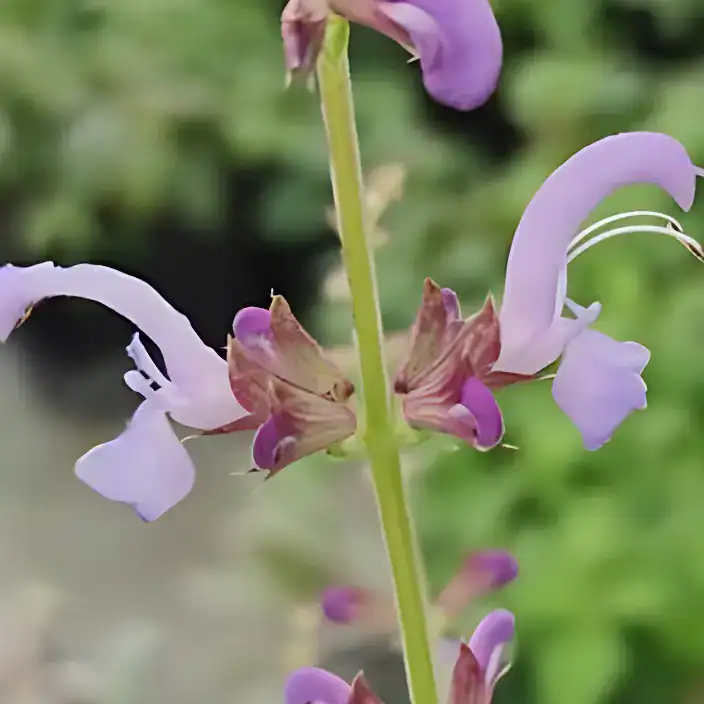
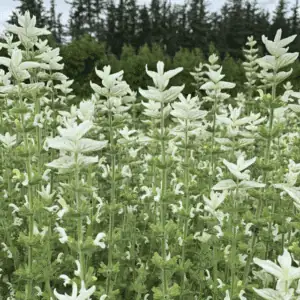
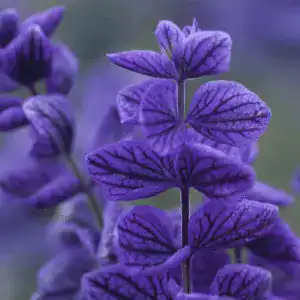
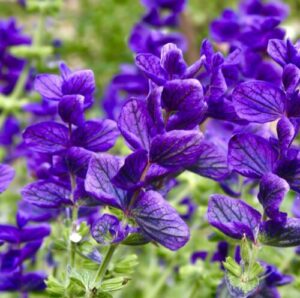
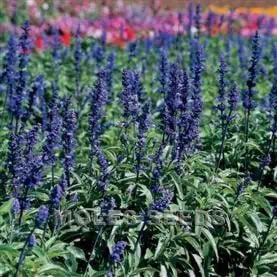
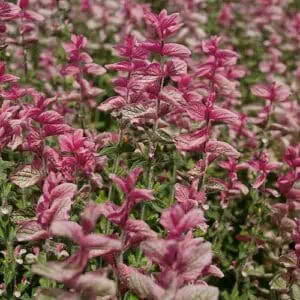
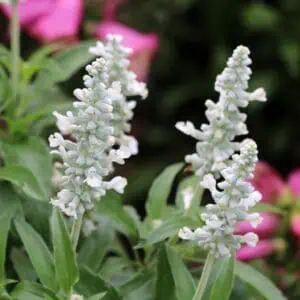
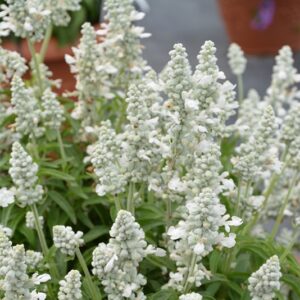
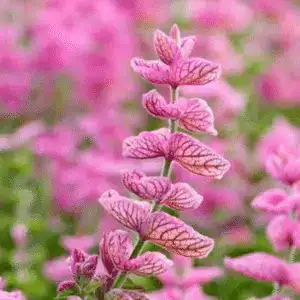
Salvia ‘Cyanescens’ also known as Blue Turkish Sage, is a striking perennial that combines both beauty and elegance in the garden. This variety is characterised by its soft, silvery-grey foliage, which forms a delicate, silken backdrop for the plant’s stunning blooms. The leaves have a subtle, almost shimmering quality, adding texture and depth to the landscape. In contrast, the plant produces eye-catching tubular flowers in a rich, dark blue hue, creating a dramatic pop of colour that stands out against the muted foliage.
The dark blue flowers are not only visually appealing but also attract a variety of pollinators, including bees and butterflies, making it a great choice for pollinator-friendly gardens. By providing a rich food source for these creatures, it plays an important role in supporting biodiversity and enhancing local ecosystems.
Its upright growth habit and slightly bushy form lend a graceful, airy presence, while its striking foliage and flowers provide a bold contrast that enhances garden borders, mixed beds, or gravel gardens. Whether used as a focal point or as part of a mixed planting, Salvia ‘Cyanescens’ offers a beautiful combination of soft textures and vibrant colour, ensuring year-round interest and a stunning display throughout its growing season.
Sow seeds from March to April in pots or seedling trays, spreading them evenly on the surface of moist compost, a light sprinkle of soil is all that’s needed to gently cover the seeds.
Once your seeds are sown, place the pots or trays in a warm, controlled environment such as a greenhouse or propagator, maintaining a consistent temperature between 20–22°C. This warm, humid environment will encourage the seeds to germinate.
Seedlings typically take 15-21 days to appear. During this time, monitor the compost to keep it moist, but avoid overwatering, which can cause the seeds to rot.
Once your seedlings are established in pots/seedling trays, transplant them into larger pots to accommodate their growth. From end of May gradually acclimate them to cooler conditions by hardening them off over 7-10 days, allowing the plants to adjust to outdoor conditions. Before planting them outside, ensure the soil is sandy, well-drained, and the site receives full sun. Pinch out growing tip to encourage new bushy growth. Deadhead spent flowers if you prefer to prevent self-seeding. Avoid pruning old stems until new growth begins to appear in the spring. The best time to divide perennial Salvias is early spring, before new growth starts to emerge.