
TL;DR — Quick Summary
- Salvia involucrata UK is the roseleaf sage — a tall, architectural salvia flowering August to November when most other plants have finished
- 'Mulberry Jam' is the most popular variety — rich hot-pink flowers in large spikes, often continuing until the first frosts
- Unlike most salvias, involucrata benefits from consistently moist soil through the growing season
- Tender (RHS H2–H3) — take cuttings in August or move under cover before first frost
- One of the most effective late-season plants for pollinators — flowering when very little else is available in September and October
Quick Facts
| Common name | Roseleaf sage |
| Hardiness | RHS H2–H3 — tender |
| Position | Full sun to light shade; shelter essential |
| Soil | Moist but well-drained — more moisture-tolerant than most salvias |
| Flowering season | August to November — one of the latest salvias |
| Height | 90–150cm depending on variety |
| Key difference | Benefits from moisture unlike drought-tolerant salvias |
| Best variety | 'Mulberry Jam' — compact and prolific |
Salvia involucrata UK is a completely different kind of salvia from the compact shrubby varieties most gardeners are familiar with. Where microphylla and jamensis are bushy and low-growing, involucrata is tall — reaching 120–150cm — architectural, and dramatically late-flowering. The flowers appear from August through to November, often continuing well into the first frosts in mild years.
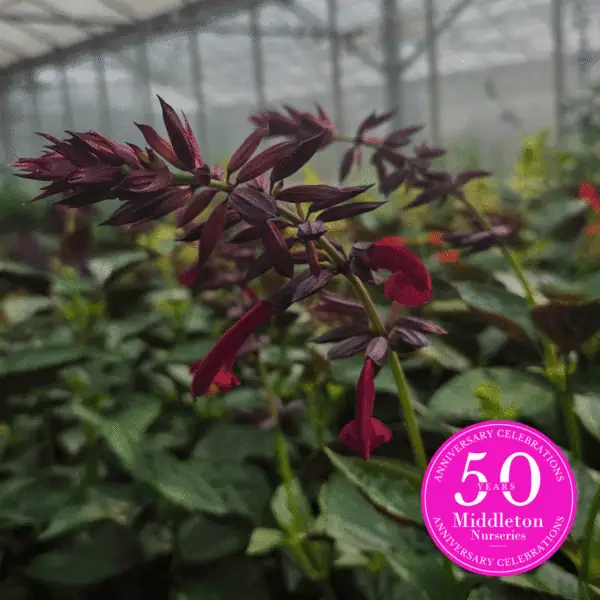
What makes it truly distinctive is the flower structure. Each bloom is enclosed in large, conspicuous bracts (the modified leaves that wrap around the flowers) in deep beetroot-pink — so the plant looks as striking in bud as it does in flower. This “roseleaf sage” quality, combined with the late season and architectural height, makes it one of the most distinctive salvias available for UK gardens.
Key Salvia involucrata UK Varieties
Salvia involucrata ‘Mulberry Jam’
Most popularRich hot-pink flowers from August to November — the most widely grown involucrata variety in UK gardens. Compact for this species at around 90–120cm. The Gardeners’ World Guide confirms ‘Mulberry Jam’ as one of the best late-season salvias available, flowering when most other plants have finished. Outstanding for pollinators in September and October. Buy Mulberry Jam at Middleton →
Salvia involucrata ‘Bethellii’
RHS H3The most architectural of the involucrata varieties — taller at 150cm+ with large, broad leaves and deep beetroot-pink flowers enclosed in prominent matching bracts. A dramatic statement plant for the back of a large border. The large leaves mean it can look shabby by late summer if allowed to dry out; consistent moisture through the season keeps it looking its best. RHS entry for 'Bethellii'.
Salvia involucrata species
Species formThe straight species — slightly more variable than the named cultivars but equally dramatic when well-grown. Reaches 150cm or more in a good season. The species form is particularly effective as a temporary screening plant through summer and autumn where a permanent structure isn’t practical.
Growing Salvia involucrata UK
Salvia involucrata UK needs slightly different treatment from the microphylla and jamensis groups — it is more moisture-tolerant and actually benefits from consistently moist soil through the growing season. This distinguishes it from most salvias and makes it useful for gardeners with heavier soils who still want the architectural late-season effect.
☀ Position & Soil
Full sun to light partial shade in a sheltered position. More moisture-tolerant than most salvias — benefits from consistently moist soil through the growing season. Still needs free-draining conditions in winter; wet, cold soil in winter will cause crown rot. The RHS tender salvia guide recommends shelter as essential.
💧 Feeding & Watering
Water more consistently than microphylla — dry conditions cause the large leaves to look tatty. Feed fortnightly with high-potash liquid fertiliser from May to September. The combination of moisture, feeding and shelter produces the most dramatic flowering display.
📅 Flowering Season
August to November — one of the very latest salvias to flower. The long flower spikes develop slowly through summer before opening in late August. This makes it invaluable for the late-season garden when most other plants are finishing.
❄ Overwintering
Tender (RHS H2–H3) — will not survive hard frosts outdoors. Take semi-ripe cuttings in August before flowering begins or move pot-grown plants under cover before first frost. See our overwintering guide and cuttings guide.
Browse Salvia involucrata at Middleton
Salvia involucrata UK varieties including 'Mulberry Jam' are available from Middleton Nurseries — grown at our Staffordshire nursery and dispatched nationwide.
Shop Salvia involucrata →