TL;DR
- The best penstemon varieties flower from early summer well into autumn, but hardiness varies from H3 to H5 on the RHS scale.
- As a rough guide from the RHS, the thinner the leaves, the hardier the penstemon.
- Plant in full sun, in free-draining soil, and protect borderline types with a dry winter mulch.
- Prune by about a third in autumn, then cut to just above the lowest new shoots in spring.
- Take cuttings every year; penstemons usually need replacing after about five years.
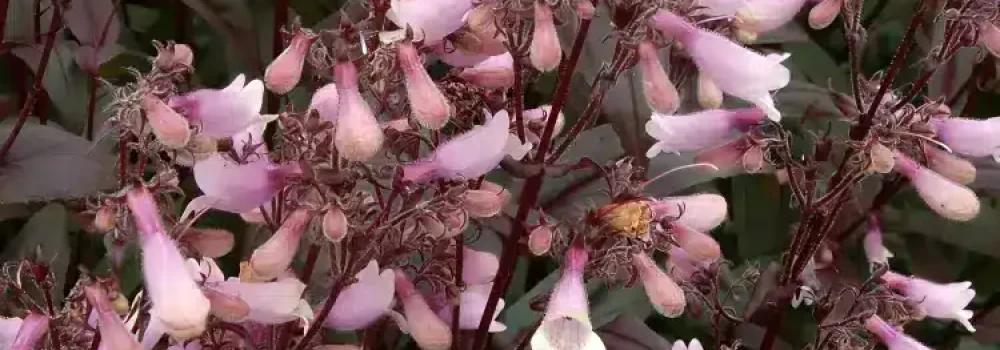
The best penstemon varieties give some of the longest flowering of any perennial, with tubular blooms in reds, pinks, purples and whites from early summer until the first frosts.
They need more care than hardy salvias, but they are easy to propagate and well worth it. This guide explains how to choose, plant, prune and propagate penstemons, using RHS advice and our experience growing perennials at Middleton Nurseries.
Quick Facts
| Common name | Penstemon, beardtongue |
| Group | Semi-evergreen perennial |
| Flowering | Early summer to autumn |
| Height | About 50cm to 1m |
| Position | Full sun, sheltered |
| Soil | Free-draining |
| Pruning | A third in autumn; to lowest shoots in spring |
| Hardiness | RHS H3 to H5, depending on variety |
How Hardy Are the Best Penstemon Varieties?
Hardiness is the first thing to check when choosing penstemons. The RHS growing guide to penstemons explains that ratings vary: ‘Roy Davidson’ is H5, Penstemon pubescens is H4, and ‘Thorn’ is H3, suitable for coastal and mild areas.
A simple rule of thumb
The RHS says that, as a rough guide, the thinner the leaves, the hardier the penstemon. Established hardy types in open ground should not need protection, while tender cultivars are better protected or kept as cuttings.
In practice, the best penstemon varieties for a cold or exposed garden are the hardier, narrow-leaved types, planted in a sheltered position against a sunny wall with sharp drainage. For borderline plants in cold areas, the RHS advises protecting them over winter with a dry mulch, and taking cuttings of tender cultivars to overwinter in a greenhouse or cold frame.
Penstemon Varieties We Grow at Middleton Nurseries
These are some of the penstemon currently available from our nursery. Stock changes through the season, so check each product page for availability.
- Penstemon digitalis ‘Dakota Burgundy’ (Dakota Series)
- Penstemon ‘Midnight Masquerade’ (Beardtongue)
- Penstemon digitalis ‘Husker Red’ (Foxglove Beardtongue)
- Penstemon ‘Dark Towers’ (Beardtongue)
Browse the full penstemon range to compare colours and hardiness.
How to Grow Penstemons
Position and soil
Plant in full sun in free-draining soil, ideally in a sheltered spot. Add grit on heavy soil, and avoid planting too deep.
Planting
Plant in spring so roots establish before winter. Water well in the first summer, and deadhead regularly to encourage more flowers.
Feed lightly with a potash-rich fertiliser in summer, particularly in pots, to encourage flowering. Mulch in spring to retain moisture, and water in dry spells. Penstemons are not fussy, but they hate sitting in wet soil in winter, so improving drainage is the most important job for anyone growing the best penstemon varieties on heavier ground.
How to Prune Penstemons
Penstemons become woody and leggy if they are not pruned hard each year. The RHS suggests cutting back by about a third in autumn, keeping enough foliage for winter protection, then in spring, around April or May, cutting just above the lowest new shoots at the base or along the stems.
SpringCut to just above the lowest new shoots (April/May).
SummerDeadhead to extend flowering.
AutumnCut back by about a third; keep some foliage for protection.
WinterProtect borderline types with a dry mulch.
Cultivar advice varies slightly, so check the RHS entry for your plant.
Propagating Penstemons from Cuttings
The RHS calls cuttings the easiest way to propagate penstemons. Take semi-ripe cuttings 5 to 10cm long from summer to early autumn, and root them in peat-free cutting compost, overwintering them under glass. Cuttings taken in spring often flower in their first summer. After about five years, penstemons often become woody and flower less, so replacing them from cuttings keeps your planting fresh. Our salvia cuttings guide uses a very similar method.
Penstemon Companions
Penstemons combine well with hardy salvias, geums and grasses. Reds and pinks look striking with blue salvias, and white varieties lighten shady edges. Plant in groups of three for impact. Our companion planting guide and summer border guide have more ideas.
Looking for the best penstemon varieties? Browse our UK-grown plants and pick colours for your border.
Shop Penstemons at Middleton NurseriesBecause penstemons flower for so long, they work well as the backbone of a summer border, filling the gaps between earlier and later perennials. Pair the best penstemon varieties with plants that share their love of sun, such as salvias and achillea, and with grasses to soften the display and add movement.
Frequently Asked Questions
What are the best penstemon varieties?
The best penstemon varieties flower for months and suit your winter conditions. Check the RHS hardiness rating, and choose thinner-leaved types for colder gardens.
Are penstemons hardy?
It varies from H3 to H5 on the RHS scale. Established hardy types need no protection in open ground, while tender cultivars need shelter or cuttings.
When should I prune penstemons?
The RHS suggests cutting back by about a third in autumn, then pruning to just above the lowest new shoots in spring.
How long do penstemons flower?
From early summer into autumn, especially if deadheaded.
Can I take cuttings?
Yes. Semi-ripe cuttings from summer to early autumn are the easiest method.
How long do penstemons last?
Often about five years, after which they become woody and are best replaced.
Do bees like penstemons?
Yes, the tubular flowers attract bumblebees and other pollinators.