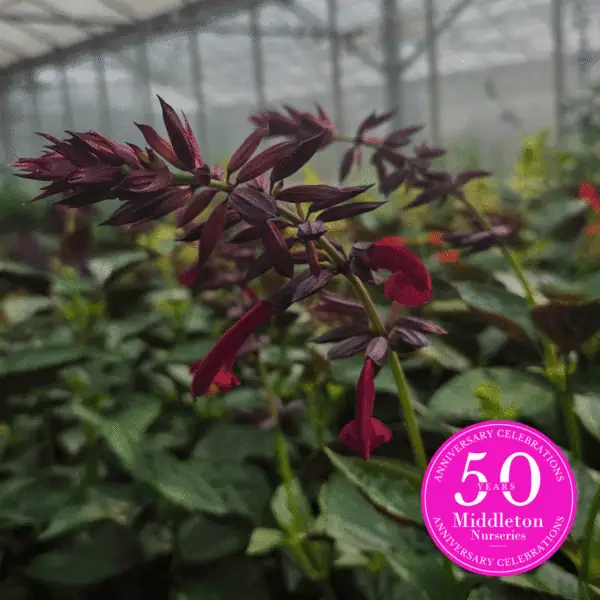


Salvia patens UK produces the most vivid true blue of any salvia available for UK gardens — a genuine gentian blue that is genuinely rare in the plant world. Salvia patens UK requires a little more management than hardy nemorosa varieties, but the extraordinary colour makes it one of the most rewarding plants in the late-summer border.
TL;DR — Quick Summary
- Salvia patens UK produces the most vivid blue flowers of any salvia — a true gentian blue that is genuinely rare in the plant world
- Tender (RHS H2–H3) — the tubers can be lifted and stored like dahlias, or take cuttings in August as an alternative
- Flowers July to October — fills a useful late-summer window between nemorosa and the first frosts
- Cambridge Blue is the most widely grown variety; Guanajuato is the most dramatic deep cobalt
- Particularly attractive to long-tongued bumblebees — one of the best late-season pollinator plants available
Quick Facts
| Hardiness | RHS H2–H3 — tender; tubers can be lifted for winter |
| Origin | Mexico — highland meadows |
| Position | Full sun; sheltered; well-drained soil essential |
| Soil | Free-draining; very vulnerable to waterlogged winter soil |
| Flowering season | July to October |
| Height | 60–100cm depending on variety |
| Overwintering | Lift tubers after first frost, or take cuttings in August |
| Pollinators | Excellent — long-tongued bumblebees in particular |
Salvia patens produces the most vivid blue flowers of any salvia — a true gentian blue that is genuinely rare in the plant world. While most “blue” plants tend towards violet, lavender or purple, patens delivers a pure, saturated blue that stops visitors in their tracks. It’s tender and requires more management than the hardy nemorosa group, but the colour alone justifies the effort. Browse our full tender salvia range for availability.
The Best Salvia patens Varieties
Salvia patens ‘Cambridge Blue’
A paler, more restrained version of the species — soft sky-blue rather than the deep gentian of the straight species. No less beautiful; in fact the cooler tone works more easily in mixed borders and cottage garden schemes. Around 60cm. One of the most elegant salvias available and an RHS-recommended variety for UK gardens.
Salvia patens ‘Guanajuato’
The deepest blue in the patens range — a rich, saturated cobalt that is extraordinary in late summer light. Tall at 80–100cm with large, dramatic hooded flowers. One of the most spectacular plants in the late-summer border and particularly effective alongside orange heleniums, warm-toned grasses and bronze sedums for a high-contrast late-season display.
Salvia patens ‘Royal Blue’
A classic deep blue — richer than Cambridge Blue but slightly more refined than the dramatic depth of Guanajuato. Around 60–70cm with a neat, upright habit. A reliable performer that sits beautifully alongside warm pink and orange companions in a late-summer border scheme.
Salvia patens ‘White Trophy’
An unusual white-flowered patens — the large hooded flowers in clean white provide a striking contrast when combined with the blue varieties. Effective in white and silver schemes or as a contrast plant in predominantly blue or purple borders. Around 60cm.
Growing Salvia patens in the UK
☀ Soil & Position
Full sun and free-draining soil are essential. Patens is particularly vulnerable to waterlogged winter soil — the tubers rot readily if drainage is poor. Plant in a sheltered position; the large flowers can be damaged by heavy rain. Improve clay soils with sharp grit before planting. The RHS tender salvia guide covers soil requirements in detail.
💧 Feeding & Watering
Water regularly through the growing season — patens is less drought-tolerant than microphylla or nemorosa. Feed fortnightly with high-potash liquid fertiliser from May to September. Once tubers are established in year two they become more self-sufficient, but consistent moisture produces the best flowering.
📅 Flowering Season
July to October in most UK gardens. Patens flowers later than nemorosa but earlier than guaranitica, filling a useful late-summer window. Deadhead regularly to extend the season. The large, hooded flowers are long-lasting individually but the plant produces them over a sustained period rather than in a single flush.
🌿 Pollinators
The large hooded flowers are particularly attractive to long-tongued bumblebees — the garden bumblebee Bombus hortorum can access the deeply-set nectar that shorter-tongued species cannot reach. Excellent late-season pollinator value. See our salvias for pollinators guide.
Overwintering Salvia patens: Lifting and Storing Tubers
Salvia patens forms dahlia-like tubers that can be lifted and stored through winter — the most reliable overwintering method for this species. Alternatively, take cuttings in August following our salvia cuttings guide.
After the first frost blackens the foliage, cut stems back to about 10cm above the ground
Dig carefully around the plant to lift the tubers without damaging them — they are brittle
Allow tubers to dry in a warm place for 24–48 hours to harden the skin and reduce rot risk
Store in a paper bag or tray of barely damp compost in a frost-free space — minimum 3–5°C
Check monthly through winter — discard any that show signs of rot; mist lightly if they shrivel
Replant in April once soil warms, or start in pots indoors in March for earlier flowering. See our full overwintering guide for the complete process
Browse our tender salvia range
Salvia patens UK is one of the most rewarding plants in the late-summer garden. Browse our full range of tender salvias at Middleton Nurseries — grown at our Staffordshire nursery and dispatched nationwide.
Shop tender salvias →