
Salvia jamensis UK is a naturally occurring hybrid between Salvia microphylla and Salvia greggii, first found growing wild in the Jameña canyon in Mexico. In UK gardens the salvia jamensis group is best known through the Lips series — Hot Lips, Pink Lips, Amethyst Lips and Cherry Lips — but there is far more to salvia jamensis UK than these iconic bicolour varieties alone.
All salvia jamensis UK varieties share the same exceptional growing season from May right through to the first frosts, the same semi-hardy status (RHS H3–H4), and the same compact bushy habit that suits both borders and containers. They require full sun, free-draining soil, fortnightly high-potash feeding from May to September, and spring cut-back rather than autumn pruning. In sheltered south-facing gardens a generous October mulch usually sees them through winter; in colder gardens take semi-ripe cuttings in August.
TL;DR — Quick Summary
- Salvia jamensis UK is a natural hybrid between microphylla and greggii — combining the best qualities of both parent species
- The Lips series (Hot Lips, Pink Lips, Amethyst Lips, Cherry Lips) are the most recognised jamensis varieties in UK gardens
- Semi-hardy RHS H3–H4 — survives mild UK winters in sheltered gardens with a mulch; needs protection in colder areas
- One of the longest-flowering salvia groups — many varieties bloom from May to the first frosts
- Naturally compact and bushy; well suited to pots, containers and front-of-border planting
Quick Facts
| Hardiness | RHS H3–H4 — semi-hardy; survives mild winters with protection |
| Origin | Natural hybrid; first found in Jameña canyon, Mexico |
| Position | Full sun; tolerates light partial shade |
| Soil | Free-draining; tolerates poor soil; dislikes waterlogging |
| Flowering season | May to first frosts — one of the longest salvia seasons |
| Height | 60–90cm depending on variety |
| Key care | Cut back in spring; deadhead through season; mulch or take cuttings for winter |
| Pollinators | Excellent — long season provides continuous forage for bees and butterflies |
Salvia × jamensis is a naturally occurring hybrid between Salvia microphylla and Salvia greggii, first found growing wild in the Jameña canyon in Mexico. It combines the best qualities of both parent species — the bushy, compact habit and long flowering season of microphylla with the slightly more upright, refined flower form of greggii. The result is a group of plants that are among the most garden-worthy salvias available, with a flowering season that runs from May right through to the first frosts.
In UK gardens the jamensis group is best known through the Lips series — Hot Lips, Pink Lips, Amethyst Lips and Cherry Lips — which together account for some of the best-selling salvia varieties we grow at Middleton Nurseries. But there’s more to jamensis than the Lips series, and this guide covers the full range.
The Lips Series
The most recognised group of jamensis varieties — bicolour and single-colour forms all sharing the same compact, bushy habit and exceptional flowering season.
Salvia × jamensis ‘Hot Lips’
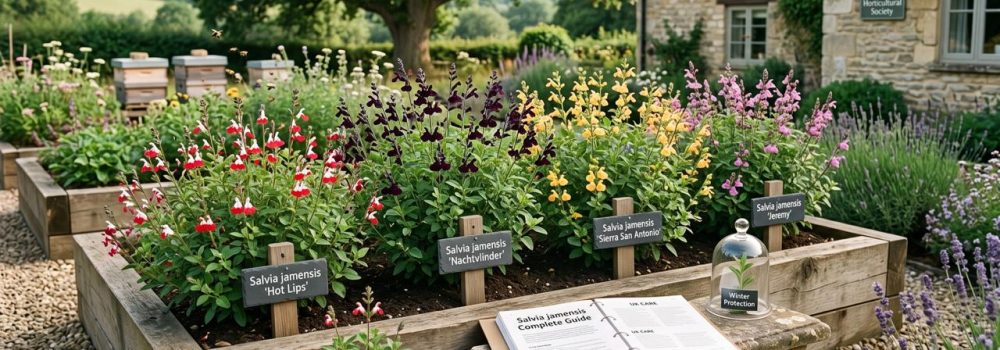
The most recognised salvia variety in UK gardens. Red and white bicolour flowers that shift between fully red, fully white and bicolour through the season depending on temperature. Bushy and compact at 60–80cm, reliably long-flowering and tough enough to overwinter in sheltered gardens with a mulch.
Buy Hot Lips →Salvia × jamensis ‘Pink Lips’
The softer, pink and white version of Hot Lips. The same bicolour dynamism and compact bushy habit but in a more restrained palette — particularly well suited to cottage garden schemes and pastel planting combinations. Same season length and hardiness as Hot Lips.
Buy Pink Lips →Salvia × jamensis ‘Amethyst Lips’
Rich purple and white bicolour — a deeper, more saturated version of the Lips formula. Slightly bolder and more dramatic than Pink Lips, and a natural partner for the blue nemorosa varieties in a mixed planting. Compact bushy habit, same long season as the rest of the series.
Salvia × jamensis ‘Cherry Lips’
Warm cherry red flowers — a richer, more saturated red than Hot Lips without the white. Particularly effective against silver foliage or grey stone. Compact and bushy with the same excellent flowering season. A good choice where a clean, single-colour red is preferred over the bicolour effect.
Other Key jamensis Varieties
Salvia × jamensis ‘Love and Wishes’
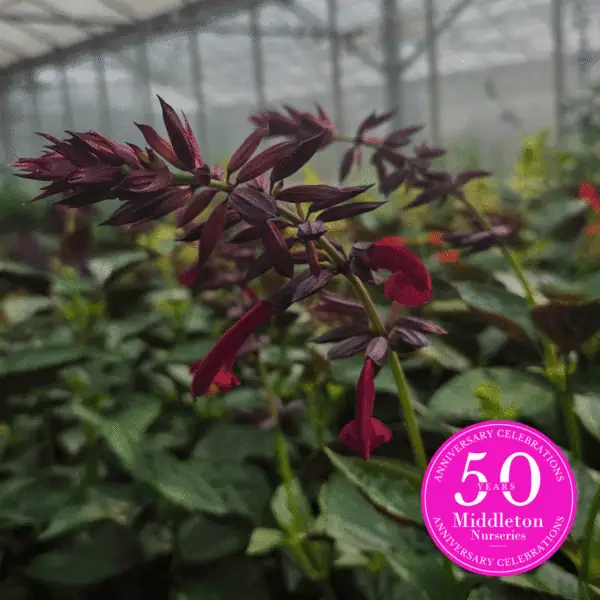
Rich red-purple flowers with deep burgundy stems and a tidy, upright habit — one of the most distinctive jamensis varieties in terms of overall effect. Flowers from June to November in most UK gardens and works equally well in borders and large containers. The dark stems echo nemorosa ‘Caradonna’ and the two combine beautifully. Note: some sources classify Love and Wishes as tender rather than semi-hardy — treat as tender in colder gardens.
Salvia × jamensis ‘Sierra San Antonio’
A distinctly unusual colour in the jamensis range — creamy yellow and peach flowers that provide a warm, sunset-toned alternative to the predominantly pink and red varieties. Very drought-tolerant, around 75cm, and particularly effective in gravel gardens and Mediterranean-style plantings where the soft warm tones complement silver and grey foliage.
Salvia × jamensis ‘Raspberry Royale’
Deep raspberry-pink flowers with a strong vigour and upright habit. Reaches around 80cm and provides a saturated, warm-toned pink that sits between the lighter Pink Lips and the deeper Amethyst Lips in the colour range. Excellent for borders and effective in combination with blue nemorosa varieties.
Growing Salvia jamensis in the UK
☀ Soil & Position
Full sun and free-draining soil — the same requirements as microphylla. Tolerates poor soil well; dislikes waterlogging, particularly in winter. In heavy clay soils, improve drainage before planting or grow in containers with a peat-free compost and 20% grit mix. See the RHS salvia growing guide for soil preparation detail.
💧 Feeding & Watering
Once established, surprisingly drought-tolerant. Feed fortnightly with a high-potash liquid fertiliser from May to September — supports flower production over leafy growth. Avoid high-nitrogen feeds. In the first season, water regularly to help establish; by year two the plant can largely rely on rainfall except in extended dry spells.
✂ Pruning
Cut back in spring once new growth appears at the base — typically April or May. Do not cut back in autumn; old stems protect the crown from frost. Deadhead every two to three weeks through summer for maximum flowering. A light trim in late summer can stimulate a final flush of autumn flowers.
❄ Overwintering
Semi-hardy (RHS H3–H4). In sheltered southern gardens, mulch the crown generously in October and leave stems for protection. In colder gardens, take cuttings in August and overwinter in a frost-free space. For pots, move to a sheltered spot and wrap in bubble wrap. Full detail in our overwintering guide.
Salvia jamensis vs microphylla vs greggii — What’s the Difference?
S. × jamensis
Natural hybrid of microphylla and greggii. Slightly more refined flower form. Includes the Lips series. Compact and bushy. May to first frosts.
S. microphylla
Slightly rounder leaves, more spreading open habit. Often the bushiest of the three. Same long season and growing requirements. Includes Jezebel, Cerro Potosi, Royal Bumble.
S. greggii
Slightly more upright with narrower leaves. Tends to be slightly more compact. Very similar growing requirements. Hot Lips is technically a × jamensis despite being commonly called greggii.
Browse our Salvia jamensis range
All our jamensis and Lips series varieties are grown at our Staffordshire nursery using peat-free compost and dispatched nationwide. Every salvia jamensis UK plant is clearly labelled with its hardiness rating.
Shop Salvia jamensis →