
TL;DR
- The best grasses to plant with salvias share their love of full sun and free-draining soil, with fine textures that contrast with upright flower spikes.
- Pennisetum, stipa and other clump-forming grasses suit sunny borders and gravel gardens.
- Grasses add movement, structure and winter interest after salvias finish flowering.
- Plant both in spring, and cut back deciduous grasses in late winter or early spring.
- Divide warm-season grasses in late spring, not autumn.
Grasses to plant with salvias create a relaxed, naturalistic border that looks good from early summer to winter.
Salvia spikes against soft, moving grass is one of the most effective plant combinations in a sunny garden. This guide explains which grasses to choose, how to combine them and how to look after both, based on the plants we grow at Middleton Nurseries.
Quick Facts
| Best partners | Pennisetum, stipa, other clump-forming grasses |
| Position | Full sun |
| Soil | Free-draining |
| Plant in | Spring |
| Cutting back | Late winter or early spring |
| Dividing | Cool-season grasses late winter; warm-season late spring |
| Best salvia partners | Nemorosa, shrubby salvias |
| Season of interest | Summer to winter |
Why Grow Grasses with Salvias?
Grasses and salvias are natural partners because they thrive in the same sunny, free-draining conditions. Salvias bring vertical flower spikes and rich colour, while grasses add soft texture, movement and a calm backdrop. Together they extend the season, because grasses build volume as salvias flower and carry on after flowering has finished.
Choosing grasses to plant with salvias also helps with maintenance. Grasses fill space between salvias, which suppresses weeds, and they shelter the base of the plants from wind. Both groups are drought tolerant once established, so a border built around them needs little watering after the first year, and suits gardeners who want a long season of colour with modest effort.
Best Grasses to Plant with Salvias
Pennisetum (fountain grass)
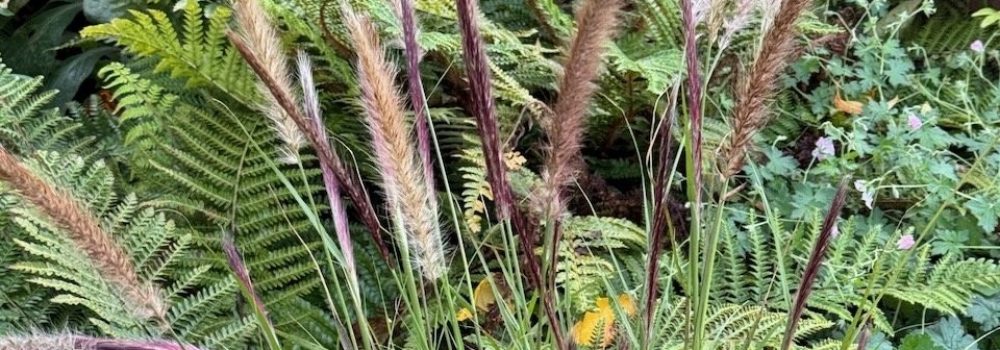
Pennisetum forms graceful clumps with soft bottlebrush plumes from late summer, and suits the same sunny, well-drained conditions as salvias. See our best pennisetum varieties guide.
Stipa and other fine-textured grasses
Airy grasses such as stipa create a see-through effect, so you can read the salvia flower spikes behind them. They suit gravel gardens and informal planting.
Compact grasses for the front of the border
Smaller grasses edge paths and sit in front of low salvias without hiding them.
When choosing grasses to plant with salvias, check the final height and spread on the label, and match it to the space. A grass that grows taller than its salvia partner will hide the flowers, while a grass that is too small will be overwhelmed. As a guide, choose grasses of similar or slightly lower height to the salvia in front of or beside them, and use taller grasses at the back of the border.
Grasses We Grow at Middleton Nurseries
These are some of the ornamental grasses currently available from our nursery. Stock changes through the season, so check each product page for availability.
- Pennisetum advena ‘Rubrum’ (Purple Fountain Grass)
- Stipa calamagrostis ‘Allgau’ (rough feather grass)
- Pennisetum alopecuroides ‘Hameln’ (Chinese Fountain Grass)
- Pennisetum thunbergii ‘Red Buttons’ (Fountain Grass)
- Pennisetum alopecuroides ‘Herbstfreude’ (Chinese Fountain Grass)
- Pennisetum ‘Vertigo’ (Purple Fountain Grass)
- Panicum ‘Purple Tears’
- Pennisetum alopecuroides ‘Moudry’ (Chinese Fountain Grass)
Browse our full grasses range to compare height, colour and hardiness.
Colour and Texture Combinations
Blue and purple salvias look wonderful with golden grasses, while red and pink salvias stand out against silvery or blue-green ones. White salvias gleam against dark foliage. See our guides to the best blue salvias and best red salvias for colour ideas, and our companion planting guide for more partners.
Blue salviaPair with golden grass.
Red salviaPair with silvery grass.
Pink salviaPair with soft, pale plumes.
White salviaPair with dark or bronze grass.
Texture matters as much as colour. Pair the fine, hairlike foliage of stipa with the broader leaves of salvias for contrast, and use the arching habit of pennisetum to soften upright spikes. In gravel gardens, repeat the same grass through the planting to create rhythm, and let salvias provide the changing colour. These are the principles that make grasses to plant with salvias so effective in practice.
Looking After Grasses and Salvias Together
Plant both in spring in free-draining soil, in groups of three or five, and water them well in their first year. Leave grasses and salvia stems standing over winter, then cut deciduous grasses back in late winter or early spring, before new growth begins, and prune hardy salvias in mid-spring. The RHS advises dividing cool-season grasses in late winter to early spring, and warm-season grasses, such as pennisetum, not until late May. Take care not to let vigorous grasses crowd salvias, and divide them if they spread.
Planning grasses to plant with salvias? Browse our UK-grown grasses and salvias together.
Shop Grasses at Middleton NurseriesFrequently Asked Questions
What are the best grasses to plant with salvias?
Pennisetum and stipa are the best grasses to plant with salvias for sunny borders, because they share the same free-draining conditions.
Do grasses and salvias need the same conditions?
Mostly yes: full sun and free-draining soil.
When should I plant grasses and salvias?
Spring, so roots establish before winter.
When should I cut back grasses?
Deciduous grasses are cut back in late winter or early spring, before new growth starts.
When should I divide ornamental grasses?
The RHS advises late winter to early spring for cool-season grasses and late spring for warm-season grasses such as pennisetum.
Do grasses attract wildlife?
Yes. Seed heads feed birds and clumps shelter insects.
Can I grow grasses and salvias in pots?
Yes, in gritty, loam-based compost in full sun.