
TL;DR
- The best anemones for autumn colour are the Japanese anemones (Anemone hupehensis and Anemone x hybrida), which flower from late summer into autumn.
- They prefer partial shade but grow in sun if the soil stays moist, in rich, fertile soil that is neither very dry nor waterlogged.
- Plant in spring or autumn and keep plants watered through the first summer.
- Cut back dead stems in early spring, and leave faded growth over winter for wildlife.
- Japanese anemones spread by suckers, so give them room or divide every three or four years.
The best anemones for autumn colour are Japanese anemones, graceful perennials that carry saucer-shaped flowers on tall, wiry stems from late summer until the first frosts.
They are tough, long-lived and very good for pollinators, and they bring soft pinks and whites to the garden when many summer plants have faded. This guide explains which varieties to choose, how to plant and care for them, and what to grow alongside them, based on the perennials we grow at Middleton Nurseries.
Quick Facts
| Common name | Japanese anemone, windflower |
| Group | Herbaceous perennial |
| Flowering | Late summer to autumn |
| Height | About 60cm to 1.5m, depending on variety |
| Position | Partial shade; sun if soil stays moist |
| Soil | Rich, fertile, moist but not waterlogged |
| Pruning | Cut back dead stems in early spring |
| Spread | Suckering; divide every 3 to 4 years |
What Are the Best Anemones for Autumn Colour?
The best anemones for autumn colour are the Japanese hybrids, which the RHS growing guide to Japanese anemones describes as tall, graceful herbaceous perennials that flower from late summer. Flower stems generally reach about 1m, and up to 1.5m in fertile soil, though shorter types of around 60cm suit smaller spaces and containers.
White Japanese anemones
White forms glow in shade and last well into autumn, making them ideal for darker corners and for moon-garden schemes.
Pink and rose Japanese anemones
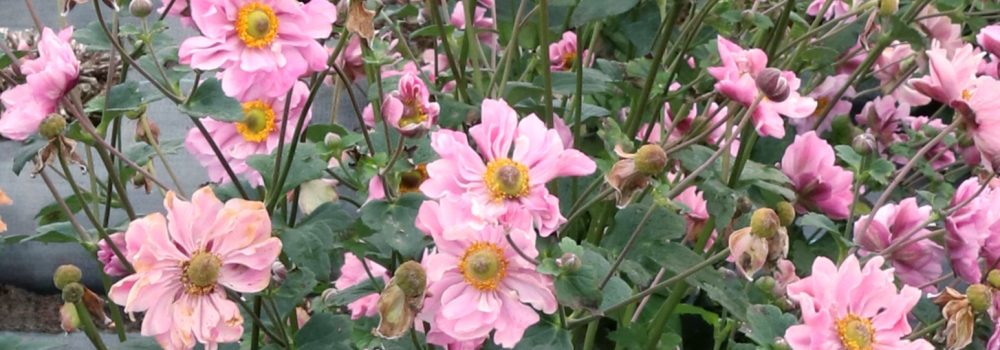
Soft pinks and deeper rose shades warm up autumn borders and pair well with asters, sedums and late salvias.
Japanese Anemones We Grow at Middleton Nurseries
These are some of the Japanese anemones currently available from our nursery. Stock changes through the season, so check each product page for availability.
- Anemone Elite ‘Pure White’ (Japanese Anemone)
- Anemone ‘Summer Breeze’ (Japanese Anemone)
- Anemone ‘Regal Swan’ (Japanese Anemone)
- Anemone x hybrida ‘Honorine Jobert’ (Japanese Anemone)
- Anemone PUFF ‘Pink’ (Japanese Anemone)
- Anemone x hybrida ‘September Charm’ (Japanese Anemone)
- Anemone x hybrida ‘Little Breeze Snow’ (Japanese Anemone)
- Anemone × hybrida ‘Pretty Lady Emily’ (Japanese Anemone)
Browse the full anemone range to compare heights and colours.
How to Grow Japanese Anemones
Position and soil
According to the RHS, partial shade suits Japanese anemones best, although they will also grow in sun as long as they do not dry out. They prefer rich, fertile soil that never becomes very dry or waterlogged.
When and how to plant
Plant in spring or autumn, when the ground is moist and warm, so the plants settle in well. Water regularly through the first summer. Once established, they usually need watering only in long dry spells.
Mulching and feeding
Mulch each spring with garden compost. Feeding is rarely needed in rich soil, and staking is usually unnecessary because the stems are sturdy.
Japanese Anemone Care Through the Year
SpringCut out dead foliage and old stems at the base before new growth starts. Mulch with compost.
SummerWater newly planted anemones in dry weather.
AutumnEnjoy the flowers and the fluffy seed heads.
WinterLeave faded growth standing; it shelters insects.
Dividing and controlling spread
Japanese anemones spread by suckers and can be hard to remove once established. The RHS suggests reducing clumps by digging out sections, or dividing every three or four years, ideally in spring.
Planting Partners for the Best Anemones for Autumn Colour
Anemones look lovely with ferns and hostas in shade, and with ornamental grasses, late salvias and sedums in brighter spots. Our salvia nemorosa varieties guide and companion planting guide offer combinations for sunnier borders.
Common Problems with Japanese Anemones
The main issues are spread, powdery mildew in dry conditions and, occasionally, leaf and bud eelworm, according to the RHS. Keep the soil moist, mulch, and give plants space. Anemones can be slow to settle in their first year, so be patient before judging how well they will perform.
Looking for the best anemones for autumn colour? Browse our UK-grown Japanese anemones and plan ahead for next autumn.
Shop Anemones at Middleton NurseriesFrequently Asked Questions
What are the best anemones for autumn colour?
Japanese anemones are the best anemones for autumn colour, flowering from late summer into autumn in white, pink and rose shades.
Do Japanese anemones like shade?
Partial shade suits them best, but they also grow in sun if the soil stays moist.
Are Japanese anemones invasive?
They spread by suckers and can be hard to remove, so site them with care and divide every three or four years.
When should I plant Japanese anemones?
Spring or autumn, when the ground is moist and warm.
When should I cut back Japanese anemones?
The RHS advises cutting out dead foliage and old stems at the base in early spring, before new growth starts.
Do Japanese anemones need staking?
Rarely. The flower stems are sturdy and do not generally need support.
Are Japanese anemones good for wildlife?
Yes. Leaving faded growth over winter provides shelter for insects, and the flowers are valuable for late pollinators.