
TL;DR
- The best astrantia varieties flower from early summer, in shades from greenish-white to deep maroon, and thrive in sun or light shade.
- Astrantia needs fertile soil that stays moist but drains well; hot, dry sites cause scorch.
- It will not flower in deep shade, so choose a spot with at least some light.
- Cut back flowered stems for a second flush, and deadhead before seed ripens if you do not want seedlings.
- Astrantia is excellent for pollinators and for cutting.
The best astrantia varieties are easy, long-flowering perennials that give you pincushion flowers and papery bracts from early summer, even in light shade.
Astrantia, or masterwort, suits cottage borders, woodland edges and cutting gardens alike. This guide explains how to choose, plant and care for it, drawing on the perennials we grow at Middleton Nurseries.
Quick Facts
| Common name | Masterwort |
| Group | Herbaceous perennial |
| Flowering | Early summer to early autumn |
| Height | Around 50cm to 90cm |
| Position | Sun or light shade |
| Soil | Fertile, moist but well-drained |
| Pruning | Cut back after flowering for a second flush |
| Wildlife | Bees and hoverflies |
What Are the Best Astrantia Varieties?
The best astrantia varieties combine strong colour with a long flowering season and a neat clumping habit. The RHS plant guide to Astrantia describes flowers in greenish-white, pink or maroon, depending on the cultivar.
Pale astrantia for shade
White and pale pink varieties glow in dappled light and brighten shady corners.
Dark astrantia for drama
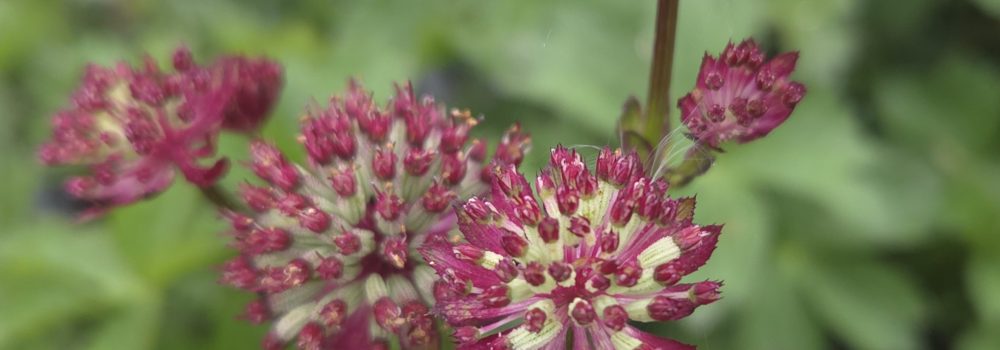
Deep reds and maroons give richness, and pair well with silvery foliage. The RHS notes that some cultivars, such as ‘Rosensinfonie’, produce a second flush of flowers late in summer if cut back hard.
Astrantia forms neat clumps of lobed leaves, and the flowers appear on branching stems from early summer. Heights range from about 50cm to over 90cm, so there is a form for the front of a border or for the middle of a woodland-edge planting. The flowers are small, but they are long-lasting, and the papery bracts hold their colour for weeks, which is why the best astrantia varieties are so popular with flower arrangers.
Astrantia Varieties We Grow at Middleton Nurseries
These are some of the astrantia currently available from our nursery. Stock changes through the season, so check each product page for availability.
- Astrantia major ‘Moulin Rouge’
- Astrantia major ‘Abbey Road’
- Astrantia major ‘Ruby Star’
- Astrantia major ‘Claret’
- Astrantia ‘Cerise Button’
- Astrantia major ‘Gracilis’
- Astrantia major ‘Ruby Wedding’
- Astrantia major ‘Burgundy Manor’
Explore the full astrantia range to compare colours and heights.
How to Grow Astrantia
Light and soil
Astrantia grows best in sun or light shade, in fertile soil that drains easily but stays moist. The RHS notes that it will not flower in deep shade, and that in hot, dry full sun the leaves can scorch.
Planting and watering
Plant in spring or autumn, adding compost on light soils. Water well in the first summer and during dry spells afterwards, and mulch in spring to hold moisture.
A good rule when growing the best astrantia varieties is to match the plant to the place: pale types in dappled shade, darker types where they receive more sun, and plenty of organic matter everywhere. Astrantia is long-lived once established, and divides easily in spring or autumn every few years if a clump becomes crowded.
Astrantia Care Through the Year
SpringMulch with compost; divide if clumps are crowded.
SummerDeadhead, and cut back flowered stems to encourage a second flush.
AutumnPlant or divide; tidy old foliage.
WinterPlants are hardy; avoid waterlogging.
The RHS advises snipping off flower stems at the base once all the flowers on a stem fade. If you leave seed heads to ripen, it delays new blooms, and you will get self-sown seedlings that may not match the parent.
In spring, new foliage appears and looks attractive before the flowers open. Mulch around the crowns, and protect new shoots from slugs. In late summer, cut back tired foliage to encourage fresh leaves. Autumn is a good time to plant new astrantia while the soil is still warm.
Planting Partners and Using Astrantia as a Cut Flower
Astrantia looks lovely with geraniums, ferns and hostas in shade, and with hardy salvias in sunnier spots. See our salvia companion planting guide and cottage garden guide for ideas. The flowers last well in a vase, and also dry beautifully.
Common Astrantia Problems
Astrantia is generally trouble-free. Dry soil leads to scorched leaves and poor flowering, slugs may nibble young leaves in spring, and plants in deep shade will not flower. Mulch, water in dry weather and choose the right spot, and most problems disappear.
Ready to choose from the best astrantia varieties? Browse our UK-grown plants and find the right colour for your garden.
Shop Astrantia at Middleton NurseriesFrequently Asked Questions
What are the best astrantia varieties?
The best astrantia varieties offer strong colour, a long flowering season and a neat habit. Choose pale types for shade and deep reds for richer borders.
Does astrantia like shade?
Astrantia tolerates light shade but will not flower in deep shade.
When does astrantia flower?
From early summer, often into early autumn, with a second flush if cut back.
Is astrantia hardy?
Yes, it is a hardy herbaceous perennial.
How do I get a second flush of flowers?
Cut flowered stems back to the foliage once the first flush fades.
Does astrantia self-seed?
It can, so deadhead before seed ripens if you want to avoid seedlings.
Do bees like astrantia?
Yes, the flowers attract bees and hoverflies.