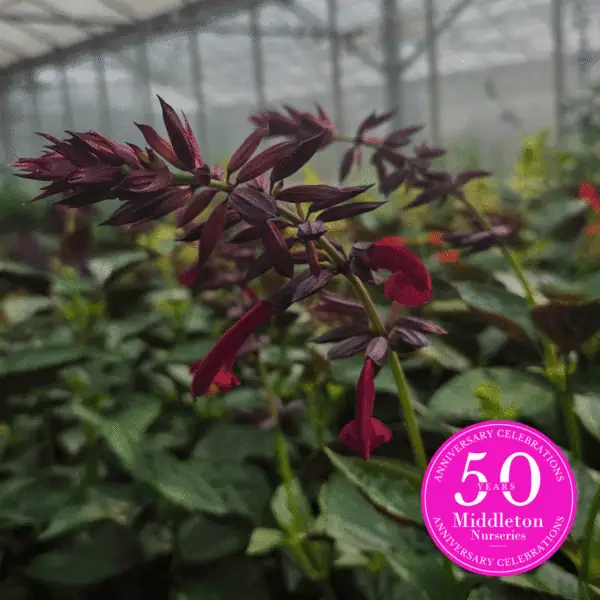


Salvia nemorosa is the backbone of the UK hardy salvia range — fully hardy throughout the country, drought-tolerant once established, and producing its characteristic upright flower spikes in blues, purples and pinks from May through to July, with a reliable second flush in late summer if cut back after the first flowers fade.
The species is native to central and eastern Europe and western Asia, growing in dry meadows and open scrub in full sun. This background makes it naturally well-adapted to UK growing conditions — particularly the combination of cold, wet winters and variable summers that characterises much of the UK climate. Unlike the semi-hardy microphylla group which needs careful siting and sometimes winter protection, nemorosa simply gets on with it.
Key Salvia nemorosa Varieties
Salvia nemorosa ‘Caradonna’ — The definitive nemorosa variety. Deep violet-blue flowers on distinctive near-black stems — an unusually dark calyx that makes the whole plant look more dramatic than most nemorosa. RHS Award of Garden Merit. Around 60cm. One of the most effective plants for combining with roses and alliums in early summer.
Salvia nemorosa ‘Mainacht’ (May Night) — Dense, deep indigo-blue spikes, darker than most nemorosa varieties. One of the earliest to flower, often starting in late April. RHS Award of Garden Merit. Around 50cm. A classic cottage garden plant and reliable pollinator plant.
Salvia nemorosa ‘East Friesland’ — Deep violet-purple flowers on compact plants at around 45cm. One of the most reliable varieties for a second flush after the Hampton Chop. RHS Award of Garden Merit.
Salvia nemorosa ‘Sensation Deep Rose’ — Rich rose-pink spikes — the best pink nemorosa for overall garden effect. Compact at around 35cm, making it one of the most useful varieties for the front of a border.
Salvia nemorosa ‘Dancing Dolphin’ — A Middleton Nurseries exclusive with a distinctive arching flower spike and an unusually graceful habit. See our full guide on ‘Dancing Dolphin’.
Growing Salvia nemorosa in the UK
Full sun and free-draining soil. Fully hardy — no winter protection required anywhere in the UK. Drought-tolerant once established; no feeding required on most soils. Leave old stems on through winter for crown protection. Cut back in spring once new growth appears at the base, typically late February to March.
After the first flush of flowers in May to June, apply the Hampton Chop — cut back by approximately half in late June or early July. This reliably produces a second flush of flowers in August and September. Without it, flowering effectively ends for the season.
See our full Salvia nemorosa varieties guide for complete growing detail and variety selection advice.
Browse all Salvia nemorosa varieties at Middleton Nurseries
Frequently Asked Questions
Is Salvia nemorosa fully hardy in the UK?
Yes — fully hardy throughout the UK, rated RHS H7. It requires no winter protection anywhere in the country, including Scotland and exposed northern gardens. It’s the most carefree salvia group for UK growing.
What is the Hampton Chop for Salvia nemorosa?
The Hampton Chop is a pruning technique for nemorosa salvias where you cut the plant back by approximately half after the first flush of flowers finishes — typically late June or early July. Done at the right time, this reliably produces a second flush of flowers in August and September. Named after RHS Hampton Court Palace Garden Festival. Note: the Hampton Chop applies to nemorosa only — never apply it to shrubby microphylla varieties.
What is the best Salvia nemorosa variety for UK gardens?
‘Caradonna’ is the most widely recommended — the combination of deep violet-blue flowers and near-black stems gives it a dramatic quality that other varieties don’t match. ‘Mainacht’ (May Night) is the best for very early flowers. ‘East Friesland’ is the most reliable for a strong second flush.
How long does Salvia nemorosa flower?
The first flush runs from May to late June or early July. After the Hampton Chop, a second flush appears in August and September. In total, with the cut-back, you get around five months of interest from the plant — two flushes of flowers with a break of three to five weeks in between.