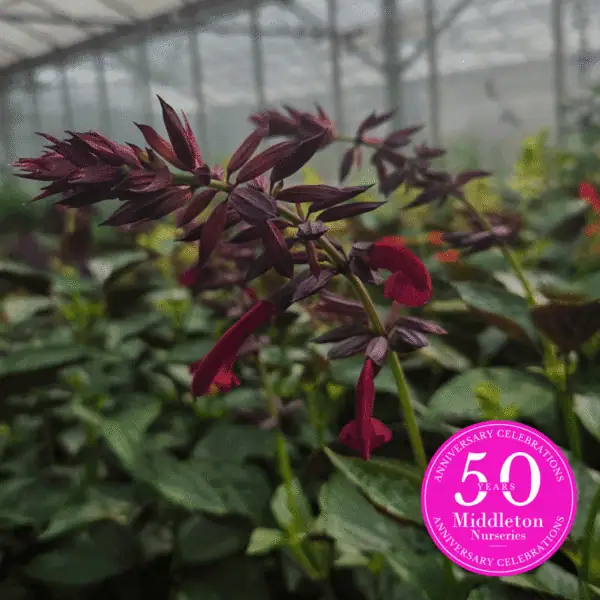

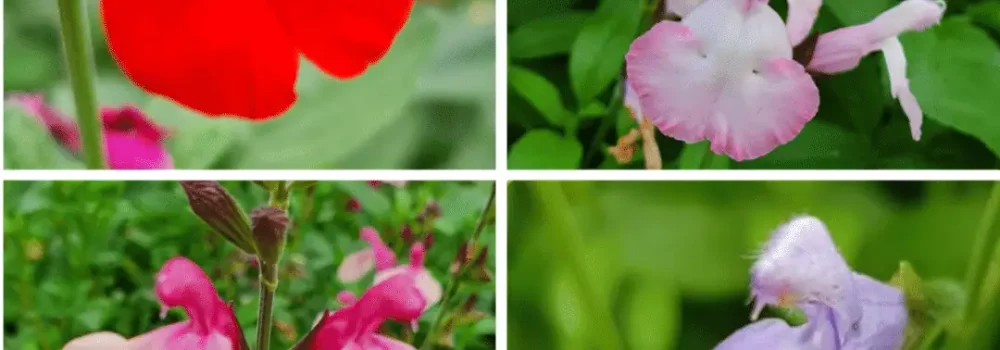
Salvia microphylla is one of the most garden-worthy plants you can grow in the UK — a compact, bushy perennial that flowers from May right through to the first frosts, attracts bees and butterflies throughout the season, and is available in a range of colours from pure white through every shade of pink and red. Understanding the microphylla group — what it is, what it needs, and which varieties suit which gardens — is the starting point for growing salvias well.
The species originates from the mountain ranges of Mexico and Arizona, where it grows in moist canyon habitats in full sun. This background explains both its preferences in cultivation — free-draining soil, full sun, consistent moisture during the growing season — and its natural tolerance of relatively dry conditions once established.
Key Salvia microphylla Varieties
Salvia microphylla ‘Hot Lips’ — The most widely grown microphylla variety in UK gardens. Red and white bicolour flowers that shift with temperature — more white in cool conditions, more red in heat. Compact and bushy at 60–80cm, reliably long-flowering and tough enough to overwinter in sheltered gardens. An RHS Award of Garden Merit holder.
Salvia microphylla ‘Jezebel’ — Rich cerise-pink flowers on a compact, well-branched plant. One of the most prolific flowerers in the microphylla range and particularly good for pollinators due to its open flower form. Around 60cm.
Salvia microphylla ‘Cerro Potosi’ — Large, rich magenta-pink flowers — among the largest individual flowers in the microphylla group. More spreading habit than some varieties at around 80cm. A vigorous grower that establishes quickly.
Salvia microphylla ‘Royal Bumble’ — Deep scarlet-red flowers with a slightly darker calyx. One of the richest, most saturated reds in the microphylla range. Outstanding for pollinators and particularly effective in warm-toned border schemes.
Salvia microphylla ‘Delice Gold and Wine’ — Deep wine-pink flowers with a contrasting white lip — a bicolour that nominated for the RHS Chelsea Plant of the Year. See our full guide on ‘Delice Gold and Wine’.
Salvia microphylla ‘Anduus’ — Soft pink and white bicolour, 2021 RHS Chelsea Plant of the Year nominee. More refined and delicate in colour than most bicolour microphyllas. See our full guide on ‘Anduus’.
How to Grow Salvia microphylla in the UK
Full sun is essential — microphylla in shade produces weak, leggy growth and few flowers. Free-draining soil prevents the winter waterlogging that is the most common cause of loss. Feed fortnightly with high-potash liquid fertiliser from May to September. Cut back in spring once new growth is visible; never cut back in autumn. Deadhead every two to three weeks for continuous flowering through the season.
Semi-hardy (RHS H3–H4) — survives mild UK winters in sheltered south-facing gardens with a generous October mulch. In colder or more exposed gardens, take semi-ripe cuttings in August. See our full microphylla care guide for complete growing detail.
Browse all Salvia microphylla varieties at Middleton Nurseries
Frequently Asked Questions
What is Salvia microphylla?
Salvia microphylla is a compact, bushy perennial salvia originating from Mexico and Arizona. The name means ‘small-leaved’ in Greek. It produces nectar-rich flowers from May to the first frosts and is one of the longest-flowering plants available for UK gardens. Semi-hardy — it survives mild UK winters in sheltered gardens.
How long does Salvia microphylla flower?
From May right through to the first frosts — typically five to six months of continuous bloom with regular deadheading every two to three weeks. This exceptional season length is one of the primary reasons microphylla is so popular with UK gardeners.
Is Salvia microphylla hardy in the UK?
Semi-hardy (RHS H3–H4). It survives mild UK winters in sheltered, south-facing gardens with free-draining soil and a generous October mulch. In colder, wetter or more exposed gardens it needs overwintering protection — take semi-ripe cuttings in August as the most reliable method.
What is the difference between Salvia microphylla and ‘Hot Lips’?
‘Hot Lips’ is technically a Salvia jamensis — a natural hybrid between microphylla and greggii — though it is commonly sold and labelled as microphylla. For practical growing purposes, it behaves identically to microphylla varieties: same season length, same hardiness, same care requirements.